


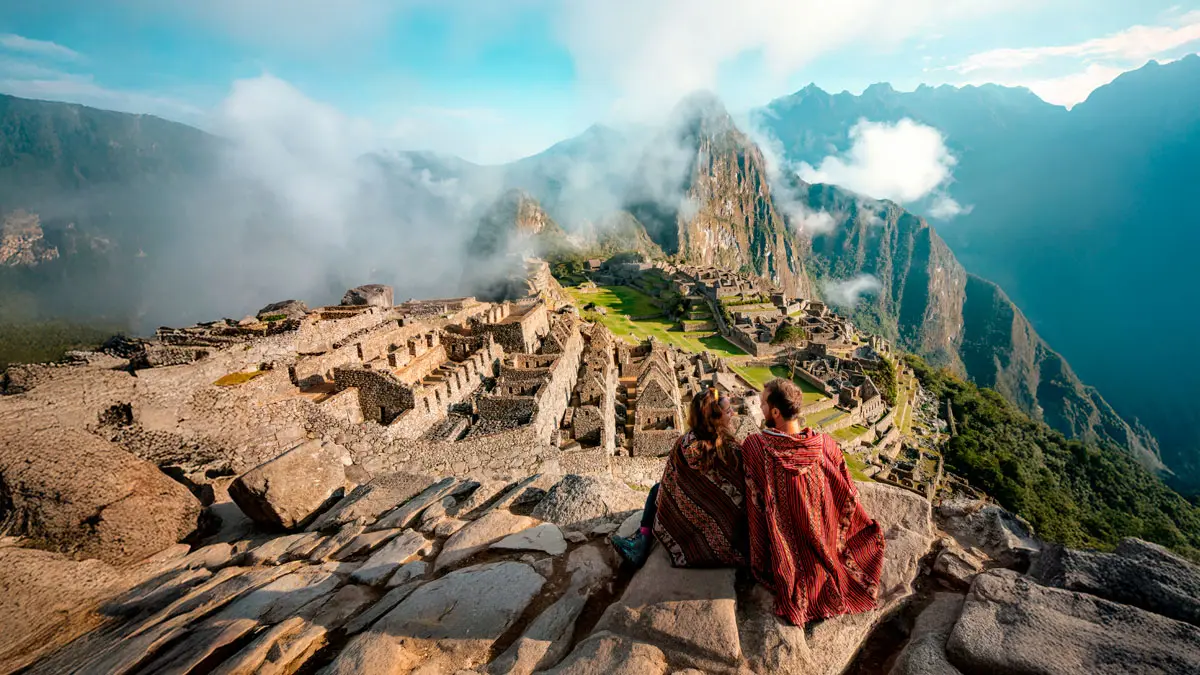
Machu Picchu
Tours in Machu Picchu, Peru
Machu Picchu is the most visited archaeological site in South America and one of the New Seven Wonders of the World. Built by the Inca emperor Pachacútec around 1450 CE and abandoned less than a century later during the Spanish conquest, the citadel was virtually unknown outside the local communities until Hiram Bingham brought it to international attention in 1911.The site sits at 2,430 m (7,970 ft) in the cloud forest above the Urubamba River, surrounded by near-vertical peaks on three sides. Its construction required cutting precisely fitted granite blocks from quarries on-site, terracing steep mountainsides to create stable agricultural platforms, and engineering sophisticated drainage systems that have kept the site structurally sound for 570 years.What makes Machu Picchu exceptional beyond its age is the setting. The citadel seems to grow from the mountain rather than sit on it. On clear mornings, before the mist burns off, it floats above the valley in silence — one of the genuinely overwhelming sights on earth.Machu Picchu receives approximately 5,500 visitors per day (government limit since 2019). The citadel is divided into two circuits — Upper and Lower. A certified guide is required for all visitors entering on the standard ticket.
Tours in Machu Picchu
28 toursMachu Picchu Amazon Route 3 Days 2026: Cloud Forest, Zip Line, Cocalmayo Hot Springs + Machu Picchu
Cusco Sacred Valley and Machu Picchu 5 Days 2026: The Complete Classic Package
From
Inca Jungle Trek 4 Days: Bike, Raft, Zip-line + Machu Picchu 2026
From
Inca Jungle Trail 3 Days to Machu Picchu: Cycling, Hiking & Zipline (2026)
From
Cusco, Sacred Valley and Machu Picchu 3 Days 2026: City Tour, Full Sacred Valley + Machu Picchu by Train
Sacred Valley and Machu Picchu 2 Days 2026: Chinchero, Maras, Moray + Machu Picchu by Train
From
Maras + Moray + Machu Picchu 2 Days 2026: Salt Mines, Circular Terraces and the Inca Citadel
Why visit Machu Picchu
- The Intihuatana stone — Carved granite ritual clock and astronomical calendar; one of the few Intihuatana stones that survived the Spanish destruction of Inca religious sites
- Temple of the Sun — Masterpiece of Inca stone architecture; the curved wall aligns perfectly with the June solstice sunrise
- The Sun Gate (Inti Punku) — 45-minute uphill hike from the citadel; the point where Inca Trail trekkers first see Machu Picchu; spectacular panoramic view
- Huayna Picchu mountain — The steep peak behind the citadel; 1-hour climb, limited to 400 visitors per day; requires separate ticket booked months in advance
- Llama grazing terraces — Resident llamas maintain the agricultural terraces by grazing; the most photographed inhabitants of Machu Picchu
- The Temple of the Three Windows — One of the largest single-stone Inca windows, aligned with the sunrise to illuminate the plaza below
- Agricultural terraces (andenes) — 700 terraces covering 4.9 hectares; the agricultural genius that fed the estate city without soil erosion
- Aguas Calientes — The gateway town at the base of the mountain; hot springs, restaurants, and the train station
Best time to visit Machu Picchu
Dry season (May–October) offers the clearest visibility: sunrises over the citadel unobstructed by mist, firm trails on the Inca Trail, and the most photogenic conditions. June–August is peak season — book trains and Machu Picchu tickets at least 4–6 weeks ahead.
Wet season (November–March) brings the famous «floating citadel» effect: morning mist rising from the valley obscures the citadel at ground level while the peaks emerge above. Dramatically atmospheric for photography, though not for clear panoramic shots. The Inca Trail closes entirely in February. Rain can be heavy in January and February, with short afternoon thunderstorms year-round.
Best time of day: Arrive early on the first bus (departing Aguas Calientes 05:30 am) to be inside before the main crowds arrive at 09:00 am. The citadel is magical in the first two hours. By 11:00 am, all 5,500 daily visitors are inside.
How to get to Machu Picchu
Step 1 — Cusco to Ollantaytambo: Minibus or shared van (~1.5 hours, S/.25–35 PEN) from Cusco to Ollantaytambo in the Sacred Valley. Most tour operators include this transfer.
Step 2 — Train to Aguas Calientes: PeruRail and Inca Rail operate tourist trains from Ollantaytambo to Aguas Calientes (about 1.5–2 hours, one-way from $45–$80 USD depending on service class). Trains must be booked in advance — capacity is limited. Our Machu Picchu tours include train tickets.
Step 3 — Bus to the citadel: From Aguas Calientes, Consettur buses wind up the switchback road to the citadel entrance (25 minutes, S/.24 PEN round trip). Alternatively, you can walk up the steep stone staircase in about 1.5 hours.
Entrance tickets: Machu Picchu tickets must be purchased online in advance at machupicchu.gob.pe. General adult ticket: approximately $60 USD. Combined tickets with Huayna Picchu or Machu Picchu Mountain are available but extremely limited — book 2–3 months ahead for peak season. Your tour operator can handle ticket purchase.
Important: Carry your passport to Machu Picchu — no copies accepted. You will show it at the ticket control and again inside the site.
What to pack for Machu Picchu
- Passport (mandatory — copies not accepted at the entrance)
- Light layers — Machu Picchu at 2,430 m is significantly warmer than Cusco; a light fleece and t-shirt usually suffice
- Waterproof jacket (afternoon rain is possible year-round; morning mist makes surfaces slippery)
- Comfortable walking shoes with grip — the citadel path involves uneven stone steps
- Insect repellent (cloud forest means mosquitoes, especially in the wet season)
- SPF 50+ sunscreen
- 1–1.5 L water (no re-entry once you leave, so bring enough water)
- Snacks (no food stands inside the site; one café at the entrance)
- Camera with extra battery — cold + high usage drains batteries
- No plastic bags, no tripods, no food inside the citadel (enforced)
- Walking poles not permitted inside (check them at the entrance)
Machu Picchu Itinerary
Day 1: Cusco to Aguas Calientes
Morning: transfer Cusco → Ollantaytambo (1.5 hrs). Lunch in Ollantaytambo, explore the fortress. Afternoon: board the Vistadome train to Aguas Calientes (1.5 hrs of scenic cloud-forest canyon). Check in to hotel, explore the town, dinner by the river. Early to bed — tomorrow starts at 5 am.
Day 2: Machu Picchu
05:30 am: first bus to the citadel. 06:00 am: gates open. 2.5–3 hours guided tour covering the main circuit: agricultural zone, urban sector, Temple of the Sun, Intihuatana, Temple of the Three Windows. Optional: 45-minute walk to the Sun Gate for panoramic views. 12:00 pm: free time or optional Huayna Picchu climb (if booked separately). 14:00–15:00: return bus to Aguas Calientes. Late afternoon train back to Ollantaytambo and transfer to Cusco.
FAQ about Machu Picchu
5Do I need a guide to visit Machu Picchu?
Yes — since 2019, all visitors are required to enter Machu Picchu with a licensed guide. Solo entry without a guide is no longer permitted. Guides are available for hire at the site entrance if you didn't pre-book, but pre-booking through a tour operator ensures you have an English-speaking certified guide and avoids potential availability issues on busy days.
How far in advance should I book Machu Picchu tickets?
During dry season (May–October), book at least 4–6 weeks ahead. For Huayna Picchu and Machu Picchu Mountain combined tickets, book 2–3 months in advance — they sell out extremely fast. The Machu Picchu ticket portal (machupicchu.gob.pe) opens capacity 6 months in advance. We handle ticket booking for all our Machu Picchu tours — contact us as early as possible.
Can I visit Machu Picchu without taking the train?
Yes, via the Inca Trail (4-day trek from km 82) or the Salkantay Trek (5 days). Both end at Aguas Calientes and then the citadel. This is a dramatically different way to arrive — you walk in through the Sun Gate at dawn after sleeping among Inca ruins for several nights. A more recent alternative is hiring a private van to km 104 and hiking only the last section (the 2-Day Inca Trail). Contact us for trekking options.
Is it worth paying for a private guide vs. a group tour?
Private guides offer flexibility (slower pace, questions answered in depth, personalized circuits) but cost 2–3x more. For first-time visitors who want to understand the historical and architectural context, a private guide adds enormous value — the site without interpretation is beautiful but incomplete. Group tours work well for independent travelers on a budget. Our private Machu Picchu service guarantees exclusive guide access for 1–6 people.
What happens if I miss my train or the site is closed for weather?
Trains run multiple times daily and Machu Picchu is very rarely closed for weather. If you miss your train, Inca Rail and PeruRail can usually accommodate you on the next available service (though peak season departures fill up). In the rare event of complete closure (usually due to landslides in heavy wet-season storms), entry tickets are fully refundable or reschedulable. We manage all rebookings for our clients.
Official endorsement
Associations & Certifications
We operate under the regulations and standards of Peru's leading tourism entities.