Sacred Valley and Machu Picchu 2 Days 2026: Chinchero, Maras, Moray + Machu Picchu by Train
-
Availability Daily departures
-
Transport Hotel pickup
-
Languages English, Spanish
-
Service type Not specified
-
Cancellation policy Not specified
-
Maximum altitude 3762 msnm m.s.n.m.
About this activity
Sacred Valley and Machu Picchu 2 days 1 night: Chinchero textile village, Maras Salt Mines, Moray circular terraces, Ollantaytambo fortress, tourist train and Machu Picchu. Entrance, 1 night hotel in Aguas Calientes, 2 lunches, round-trip train and bilingual guide included. From $386.
Why Choose This Tour?
- Chinchero (3,762 m) — living Inca textile village + colonial church on Inca foundations
- Moray — circular Inca terraces, 15°C microclimate gradient
- Maras Salt Mines — 5,000+ artisanal salt pools
- Ollantaytambo fortress — the only Inca military victory against the conquistadors
- Tourist train Ollantaytambo ↔ Aguas Calientes through the Urubamba Canyon
- Machu Picchu (2,430 m) — New 7th Wonder of the World
Itinerary
Day 01
Cusco → Chinchero → Maras → Moray → Ollantaytambo → Train → Aguas Calientes
06:00–06:30 hrs — Hotel pick-up in the historic center of Cusco. Tourist transport heads northwest toward the Sacred Valley highlands.
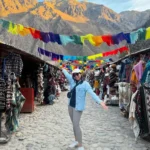
Chinchero (3,762 m) — The village of Chinchero sits at the highest point of the route, on a plateau above the Sacred Valley with 360-degree views of the Andean landscape. It is the most important living center of traditional Andean weaving in the Cusco region.
The visit begins with a complete 4-step weaving demonstration by local Quechua women of the Chinchero textile community:
- Raw fiber preparation — Cleaning and combing alpaca or sheep wool into uniform fiber. Alpaca fiber is preferred for its warmth (3x warmer than wool) and hypoallergenic properties.
- Natural dyeing — Up to 16 colors extracted from plants, minerals and insects: cochineal insects (red → pink → orange depending on mordant), muña plant (yellow → chartreuse), molle bark (brown), indigo plant (blue). The same plants Inca weavers used 600 years ago.
- Hand-spinning — Drop spindle technique that pre-dates the wheel in the Andes. Women spin continuously during conversation, walking and ceremonies — a motor memory developed from childhood.
- Backstrap loom weaving — The loom is anchored to a fixed point (a tree, door frame or hook) and the weaver uses her body weight as the tension mechanism. Geometric patterns like chakana (Andean cross), serpents and condors are stored in the weaver's memory, not written down — each design is a cultural record transmitted orally between generations.
Chinchero colonial church (16th century) — Visible immediately as you enter the village square: a whitewashed Baroque church whose walls and lower foundations are original Inca granite construction from an Inca royal palace. The Spanish standard practice throughout the Cusco region was to use Inca stonework as foundations, both for practicality (the Inca masonry was too well-built to easily demolish) and as a symbolic act of superimposing Christianity over Andean religion. (Tourist Pass BTP ~S/. 70 required for Chinchero ruins — not included.)
Maras Salt Mines (Salineras de Maras, 3,380 m) — Over 5,000 terraced salt pools cascade down a hillside above the Sacred Valley, fed by the underground spring Qoripujio whose water filters through a 100-million-year-old marine evaporite layer. The water arrives at the surface already saturated with sodium chloride and mineral salts (magnesium, calcium, potassium). The Maras community has operated these pools continuously since before the Inca period — each family inherits their pools from generation to generation, maintaining the ancient distribution canal system unchanged for 600+ years. No machinery, no technology: gravity and sunlight are the only tools. The salt is available for direct purchase from community producers at the site. (Entrance ~S/. 10–20 — not included.)
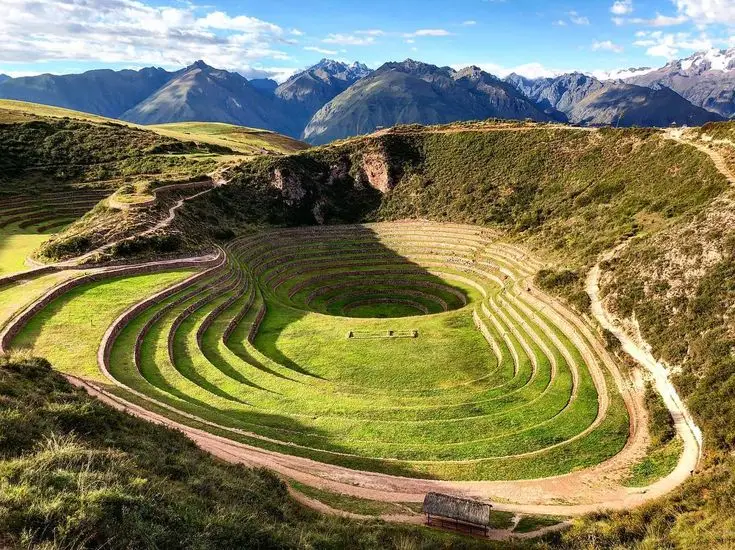
Moray (3,400 m) — Seven concentric circular terraces descending 30 meters from the outer rim to the center floor. The temperature differential between the top and bottom terraces is approximately 15°C — an effect caused by the bowl shape trapping cold air at the base in winter and solar heat in summer, while the surrounding plateau experiences normal highland weather. Modern archaeoagronomists confirm that the Incas used Moray as an agricultural research laboratory: different micro-climate zones allowed them to test the cultivation of more than 250 plant species from ecological zones across the Inca Empire, from high puna to Amazon jungle. A complete drainage and irrigation network designed 600 years ago continues to function today. (Tourist Pass BTP ~S/. 70 — not included.)
~13:30 hrs — Buffet lunch (included) at a local restaurant in the Sacred Valley between Maras and Ollantaytambo. Typical Sacred Valley cuisine: Andean soups, trout from the Urubamba River, quinoa dishes, chicha morada.
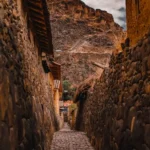
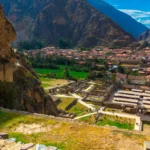
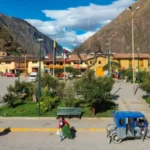
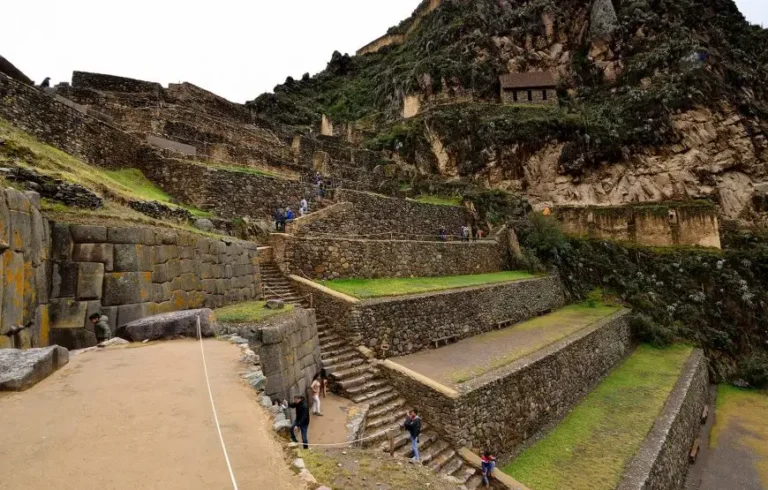
Ollantaytambo (2,792 m) — The only Inca town in Peru that maintains its original 15th-century urban layout and is still inhabited by the same Quechua community. The canchas (residential blocks enclosed by stone walls), the central water channels running down every street, and the narrow cobblestone lanes are the original construction. Modern families live in houses whose foundations and lower walls are Inca stonework.
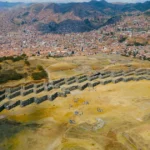
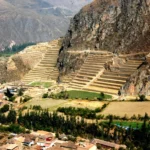
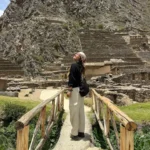
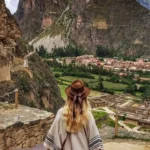
The Ollantaytambo Fortress stands on a hillside above the town: six monumental platforms of megalithic red granite, the largest blocks weighing 50+ tons each, transported from the Cachicata quarry 7 km across the Urubamba River and up the mountainside. The engineering achievement — moving blocks of this size without wheels, iron tools or draft animals — remains a subject of active archaeological research. In 1537, Manco Inca II defeated Hernando Pizarro here in the only major open-field Inca military victory against the conquistadors: he flooded the valley plain by diverting the Urubamba River, bogging down the Spanish cavalry. (Tourist Pass BTP — not included.)
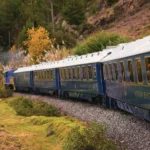
~17:30–18:00 hrs — Tourist train (PeruRail Expedition class, included) departs Ollantaytambo station toward Aguas Calientes. The 1h40min journey through the Urubamba Canyon is one of the most scenic rail journeys in South America: the train descends from 2,792 m to 2,040 m as the valley narrows and the vegetation transitions from dry highlands to lush subtropical cloud forest. Panoramic windows on both sides. Photography is excellent in the final 40 minutes as the canyon walls close in and Machu Picchu Mountain begins to appear above the treeline.
~19:30–20:00 hrs — Arrival in Aguas Calientes (2,040 m / Machu Picchu Pueblo). Hotel check-in. The guide provides the Day 2 briefing: bus schedule, Machu Picchu entry time, which circuit to follow and what to prioritize.
Free evening — Dinner at own account. The town's riverfront has multiple restaurants specializing in local trout (trucha al ajillo, grilled trout), Andean stews and international options. Optional: thermal baths (Baños Termales, ~S/. 20, 10 min walk from the train station) — natural hot springs excellent for tired legs.

Day 02
Machu Picchu + Return to Cusco
Early morning — Consettur bus up the switchback road to Machu Picchu (25 min, ~$20 round trip, not included) or hike the stairs (~1h30min, free).
~06:00–07:00 hrs — Entry to Machu Picchu Archaeological Park (2,430 m)
2-hour guided visit with MINCETUR bilingual guide:
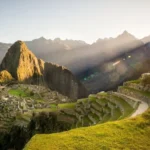
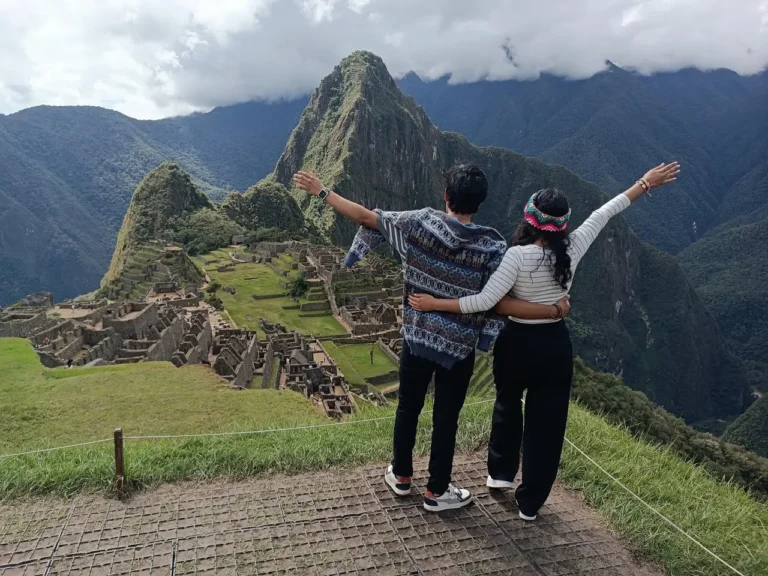
Classic access terrace — The world's most recognizable viewpoint: the entire citadel spread across a mountain saddle, with Huayna Picchu peak rising behind it and the Urubamba canyon 1,000 meters below on three sides. This is Circuit 2, the standard route covering all major monuments.
Intihuatana ("hitching post of the sun") — The only intact Inca solar gnomon remaining in the Empire. Every other Intihuatana in the Inca world was destroyed by the Spanish as a symbol of Andean religion. Machu Picchu's survived because the Spanish never reached it.
Sun Tower — Circular astronomical observatory aligned with the June solstice sunrise. The precision of the alignment — a sunbeam entering a specific window and striking an engraved stone marker — was achieved through years of observation and millimetric stone placement.
Temple of the Three Windows — Three massive trapezoid windows overlooking the main plaza. The stonework uses no mortar: individual stones of different sizes fit together with interlocking irregular edges, giving the wall flexibility during earthquakes without using brittle adhesive. A razor blade still cannot fit between any two stones after 600 years and dozens of major earthquakes.
Temple of the Condor — Natural rock formation carved to represent the Andean condor (Vultur gryphus, wingspan up to 3.2 m) in flight. Below it, an underground chamber where ritual offerings were made to Uku Pacha, the Inca underworld.
Agricultural terraces and resident llamas — The terraced hillside below the citadel supports approximately 20 resident llamas, direct descendants of the animals the Inca maintained for wool, meat and religious offerings. Photographing them with the citadel backdrop and Huayna Picchu behind is the characteristic image associated with Machu Picchu.
Key facts:
- Built ~1438 AD under Pachacútec
- Abandoned ~1540, before Spanish arrived
- Rediscovered July 24, 1911 by Hiram Bingham III
- UNESCO World Heritage Site: 1983
- New Seven Wonders: 2007
- Daily quota: ~4,500 visitors, 4 circuits
~09:30–11:30 hrs — Free time for additional circuits, optional ascents or extended photography.
~12:00 hrs — Consettur bus down to Aguas Calientes. Buffet lunch (included, Day 2). Afternoon free time in town: artisan market, Machu Picchu Museum (free with park ticket — pre-Columbian ceramics, original Bingham expedition photographs).
~14:30 or 19:00 hrs — Return tourist train Aguas Calientes → Ollantaytambo. Tourist transport from Ollantaytambo to Cusco.
~21:00–22:00 hrs — Arrival in Cusco. End of service.
What's included
Inclusions
-
Meals
- Buffet lunch Day 1 (Sacred Valley restaurant)
- Buffet lunch Day 2 (Aguas Calientes, after Machu Picchu)
- 1 night accommodation in Aguas Calientes (standard double room, breakfast included)
-
Tickets & Permits
- Machu Picchu Archaeological Park entrance ticket
-
Guide
- Visit to Chinchero (textile demonstration + Inca ruins) with guide
- Visit to Maras Salt Mines with guide
- Visit to Moray with guide
- Visit to Ollantaytambo Fortress with guide
- MINCETUR bilingual guide at all sites
-
Transportation
- Hotel pick-up and return to Cusco
- Tourist train Ollantaytambo ↔ Aguas Calientes round trip (Expedition class)
- Consettur bus Aguas Calientes ↔ Machu Picchu (round trip)
-
Other
- First aid kit
Frequently Asked Questions
What is the difference between this tour and the Maras + Moray + Machu Picchu 2-Day?
The key difference is Chinchero. This tour adds the Chinchero textile village and colonial church (one of the most interesting combinations of Inca and Spanish colonial history in the region) to the Maras + Moray + Ollantaytambo itinerary. If you have not yet seen a Quechua weaving demonstration or the Inca-over-colonial-church architecture, include this tour. If time is tight and you want to focus on the landscape sites (salt mines and terraces), the Maras + Moray + Machu Picchu 2-Day is the alternative.
Is the Tourist Pass BTP required and where do I buy it?
Yes — the Tourist Pass BTP (~S/. 70 PEN) is required for Chinchero, Moray, Ollantaytambo and Pisac ruins. It can be purchased at any of the entrance gates or at the BTP office in Cusco city center before the tour. The BTP also covers Sacsayhuaman, Qenqo, Puca Pucara, Tambomachay and other sites — useful across multiple days. Bring cash in soles: credit cards are not accepted at all sites.
How far in advance do I need to book?
Minimum 48 hours for logistics. For Machu Picchu tickets: book as early as possible. During high season (June–August, Christmas, Easter) tickets sell out weeks ahead. We check availability before confirming your booking — you will never pay for a tour with unavailable dates. Train tickets also have limited capacity; earlier booking means better departure times.
What train class is included and can I upgrade?
The standard package includes PeruRail Expedition class: comfortable seats, panoramic windows, snack service, ~1h40min journey. Upgrades available: Vistadome (glass-panel roof for better views of the canyon, ~$25–40 supplement per trip) or Hiram Bingham (full gourmet service, live music, open bar, ~$200+ supplement). Request upgrades at booking — train seats are limited.
Can I add Huayna Picchu or Machu Picchu Mountain?
Both require separate tickets booked 4–6 months ahead during high season. Huayna Picchu: 400 quotas/day in two shifts (07:00 and 10:00). Machu Picchu Mountain: 800 quotas/day. If you want to include either, inform us when booking — we will attempt to secure tickets depending on availability. Standard Day 2 uses Circuit 2 of Machu Picchu and does not require either mountain ticket.
Is this tour suitable for someone who has never been to the Sacred Valley before?
This is an ideal first-time Sacred Valley tour. The 4-site sequence (Chinchero → Maras → Moray → Ollantaytambo) covers the main threads of Sacred Valley history — textile tradition, salt extraction, agricultural science and military architecture — in a logical progression that builds toward Machu Picchu the following day. If you have already seen Chinchero and prefer a more focused itinerary, see our Maras + Moray + Machu Picchu 2-Day.
What is the minimum group size?
This is a shared group tour requiring a minimum of 2 participants. If you are a solo traveler, we can match you with other travelers on the same dates at no additional cost. Alternatively, a private version for solo travelers or small groups is available — contact us on WhatsApp for private pricing.
What should I pack for 2 days?
A small 20L day pack is sufficient. Essentials: trekking shoes with grip (Machu Picchu stone paths are uneven), rain poncho (afternoon showers possible April–November), layers (cold in Chinchero at 3,762 m, warm and humid in Aguas Calientes), sunscreen SPF 50+, insect repellent (for Aguas Calientes), passport original (required at Machu Picchu — copies not accepted), cash in soles for Tourist Pass and optional thermal baths.
Is a private version available?
Yes. Private tours with dedicated transport and guide exclusively for your group run on your schedule with flexible stops. Available for any group size from 2 people. Contact us on WhatsApp for a private quote with your travel dates.
What is the best time of year for this tour?
April–October (dry season): best visibility at all sites, clear skies for the Machu Picchu panorama and train journey, salt crystals at Maras are clearly visible. November–March (rainy season): Maras pools overflow creating dramatic cascades, Moray terraces are vivid green, Machu Picchu is surrounded by lush jungle. Both seasons work well — the key is booking Machu Picchu tickets far enough ahead regardless of season.
Why book with Travel Peru Tours?
We are 100% local operators based in Cusco. Our MINCETUR guides have direct expertise at every site in this itinerary and are not rotated between unrelated destinations. We handle train tickets, Machu Picchu entrance, hotel and all logistics in a single confirmed booking — no coordination risk. Contact us on WhatsApp to confirm availability.
Can’t find the answer to your question?
Get in touch with the experts at Travel Peru Tours for your inquiry.
Ask a questionTraveler reviews
Did you take this tour?
Share your experience with other travelers
Let our local experts help you plan your perfect adventure in Peru.
Write to us and we'll reply within 24 hours.
Related Tours
Related trips you might be interested in
From
$386 USD
Official endorsement
Associations & Certifications
We operate under the regulations and standards of Peru's leading tourism entities.