Cusco, Sacred Valley and Machu Picchu 3 Days 2026: City Tour, Full Sacred Valley + Machu Picchu by Train
-
Availability Daily departures
-
Transport Hotel pickup
-
Languages English, Spanish
-
Service type Not specified
-
Cancellation policy Not specified
-
Maximum altitude 3800 msnm m.s.n.m.
About this activity
The Cusco, Sacred Valley and Machu Picchu 3-day tour is the most efficient package for first-time visitors to Peru who want to see Cusco’s Inca and colonial heritage, the Sacred Valley’s key sites, and Machu Picchu — all in a consecutive 3-day sequence without rushing. Three full days: one for Cusco, one for the Sacred Valley, one for Machu Picchu.
Why Choose This Tour?
- Cusco City Tour — Qoricancha, Cathedral, Sacsayhuaman and 3 Inca ruins
- Pisac artisan market + Inca ruins above the town
- Maras Salt Mines (5,000+ pools) + Moray circular terraces
- Ollantaytambo fortress — only living Inca town in Peru
- Tourist train Ollantaytambo ↔ Aguas Calientes through cloud forest
- Machu Picchu (2,430 m) — UNESCO World Heritage + New 7th Wonder
Itinerary
Day 01
Cusco City Tour
Cusco City Tour
09:00 or 13:00 hrs — Hotel pick-up. Two departure options — the afternoon slot accommodates travelers arriving in Cusco on Day 1 morning who want to rest first.
Qoricancha (Temple of the Sun, 2 km from Plaza de Armas) — The Inca Empire's most sacred and once its wealthiest temple. Built between 1438 and 1471 under emperors Pachacútec and Tupac Inca Yupanqui. Originally: 700 solid gold plates covering the walls, each weighing ~2 kg; a massive golden disc representing Inti (the sun deity) positioned to catch the solstice sunrise; golden statues of rulers, animals and plants in the garden. By 1535, the Spanish had stripped everything and awarded the structure to Dominican friars, who built the Convent of Santo Domingo on Inca foundations. The 1950 Cusco earthquake damaged the convent but left the Inca granite walls perfectly intact — visible today as the lower half of the complex. The curved wall along Avenida El Sol, visible from the street, is among the finest examples of Inca stone-cutting anywhere.
Cusco Cathedral (1560–1654, Plaza de Armas) — Built over 94 years using stone quarried from Sacsayhuaman. The largest colonial church in the Andes. Interior: La Linda (the beautiful), the most revered statue of the Virgin in Cusco; Señor de los Temblores (Lord of the Earthquakes), a dark-skinned Christ figure that locals carry in procession each Easter to prevent earthquakes; and Marcos Zapata's Last Supper (1753), depicting Christ sharing cuy (guinea pig), chicha morada and tropical fruits with his apostles — Andean ingredients at the holiest table of Christianity.
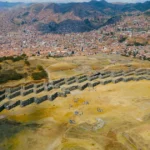
Sacsayhuaman (3,700 m) — The ceremonial fortress above Cusco with three massive zigzag limestone walls. Individual stones weigh up to 125 tons — transported without wheels or iron tools, using rope, ramps and thousands of workers under the Inca mit'a labor system. The walls remain structurally stable after 500+ years and 5+ major earthquakes, including the catastrophic 1950 event that leveled much of colonial Cusco. The technique: stones of varying sizes with concave-convex interlocking edges that actually strengthen under seismic pressure. In 1536, Manco Inca II used Sacsayhuaman as the command center for his siege of Cusco — the Spanish were pinned down in the Plaza de Armas while Inca forces occupied the fortress for weeks.
Qenqo — Rock outcrop carved with channels, an underground mummification chamber and symbolic representations of the Inca tripartite cosmology (condor / puma / serpent). Estimated construction: 15th century. The channels were likely used for chicha or llama-blood offerings during the June solstice ceremony.
Tambomachay — Ceremonial water complex with three tiers of stone-channeled fountains maintaining constant flow for 600 years without a single interruption. Water worship — the Inca reverence for water as a sacred gift from the mountain gods (Apus) — is architecturally manifested here more clearly than anywhere else near Cusco. (Tourist Pass BTP ~S/. 70 required — not included.)
~18:00 hrs — Return to hotel. The guide provides information about Day 2 pick-up time and packing recommendations.
Day 02
Sacred Valley: Pisac, Maras, Moray, Ollantaytambo → Train to Aguas Calientes
07:00–07:30 hrs — Hotel pick-up in Cusco. Tourist transport toward the Sacred Valley.
Pisac (2,972 m) — The Sacred Valley's commercial and cultural hub. Two distinct components:
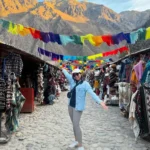
Pisac artisan market (lower town) — The largest traditional market in the Sacred Valley, occupying multiple plazas with stalls selling textiles, ceramics, silverwork, carved wood, spices, dried herbs and natural dyes. Prices are significantly lower than shops in Cusco city center and negotiation is standard. Vendors are local Quechua artisans, many in traditional dress. Best for purchasing alpaca textiles, ceramic replicas and local medicinal herbs.
Pisac Inca ruins (above the town, ~45 min hike or short drive) — One of the most extensive Inca complexes in the region, covering an entire mountain ridge above the town: agricultural terraces, water channels, sun temples, a functioning intihuatana solar clock, and one of the largest Inca cemetery complexes, with thousands of chullpa (burial towers) visible on the cliffs above the terraces. (Tourist Pass BTP required.)
Maras Salt Mines (Salineras de Maras, 3,380 m) — Over 5,000 salt pools cascade down a hillside in an amphitheater arrangement, fed by the spring Qoripujio — water that filters through a 100-million-year-old marine evaporite layer and arrives at the surface pre-saturated with salt and minerals. The Maras community has operated these pools continuously since before the Inca period. Each family inherits their pools from generation to generation, managing an ancient distribution canal system unchanged for 600+ years. No machinery or technology — only gravity and solar evaporation. Buy mineral salt directly from the producers at source. (Entrance ~S/. 10–20 — not included.)
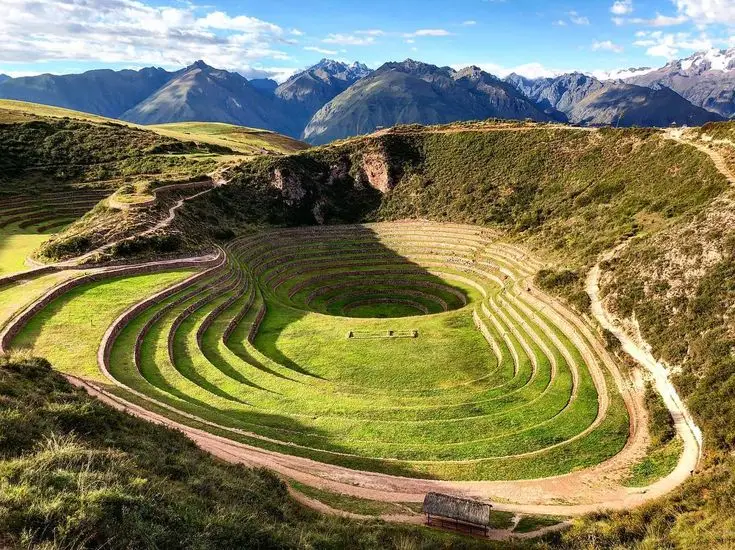
Moray (3,400 m) — Seven concentric circular terraces descending 30 meters from the outer edge to the center floor. The 15°C temperature differential between top and bottom terraces created a controlled microclimate system the Incas used to test cultivation of 250+ plant species from different ecological zones. Today, archaeoagronomists from the University of Cusco still study the drainage system — the engineering of controlled water movement through the 30-meter bowl remains only partially understood. (Tourist Pass BTP — not included.)
~13:30 hrs — Buffet lunch (included) at a local restaurant in the Sacred Valley.
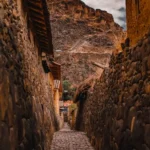
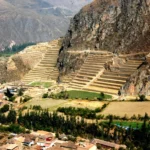
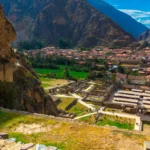
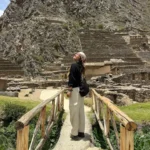
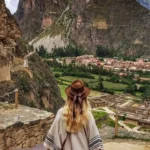
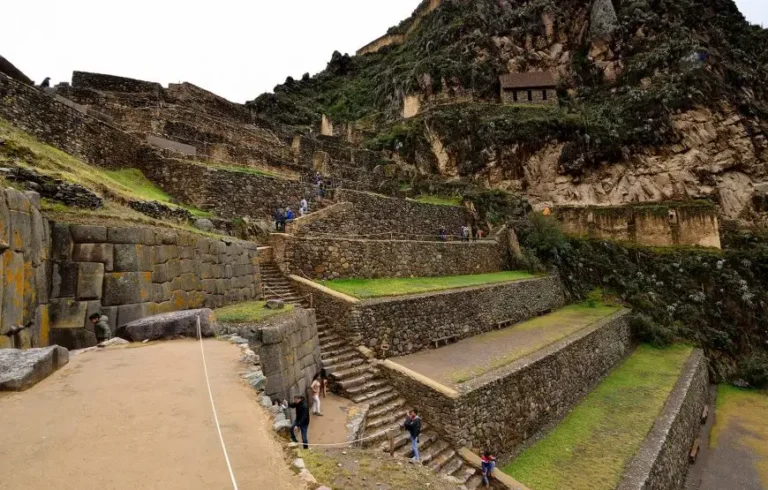
Ollantaytambo (2,792 m) — The only Inca urban center in Peru that maintains its 15th-century layout with continuous occupation by the same community. The narrow streets, stone water channels and canchas (residential blocks) are original Inca construction, still lived in by Quechua families today. The Ollantaytambo Fortress: six platforms of megalithic red granite from the Cachicata quarry, 7 km across the Urubamba River. The Sun Temple at the summit — still partially under construction when the Spanish arrived — features six monolithic slabs weighing 50+ tons each, fitted with micrometric precision. In 1537, Manco Inca II defeated the Spanish here by flooding the valley plain, creating the only major open-field Inca military victory of the entire conquest period. (Tourist Pass BTP — not included.)
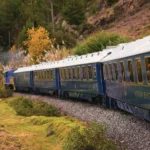
~17:30–18:00 hrs — Tourist train (PeruRail Expedition class, included) from Ollantaytambo station. 1h40min journey descending 750 m through the Urubamba Canyon cloud forest: the valley narrows, the air warms, subtropical vegetation replaces highland grasses, and Machu Picchu Mountain becomes visible above the treetops. Large panoramic windows on both sides.
~19:30–20:00 hrs — Arrival in Aguas Calientes (2,040 m / Machu Picchu Pueblo). Hotel check-in. The guide provides the Day 3 briefing: bus schedule, entry time, circuit and what to see first. Free evening — dinner at own account. Optional thermal baths (~S/. 20, 10 min walk).
Day 03
Machu Picchu + Return to Cusco
Early morning — Consettur bus up the switchback road (~$20 round trip, not included, departs 05:30+) or stair hike (1h30min, free, ~1,700 steps from Aguas Calientes).
~06:00–07:00 hrs — Entry to Machu Picchu Archaeological Park (2,430 m)
2-hour guided visit — Circuit 2, the standard complete route:
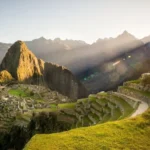
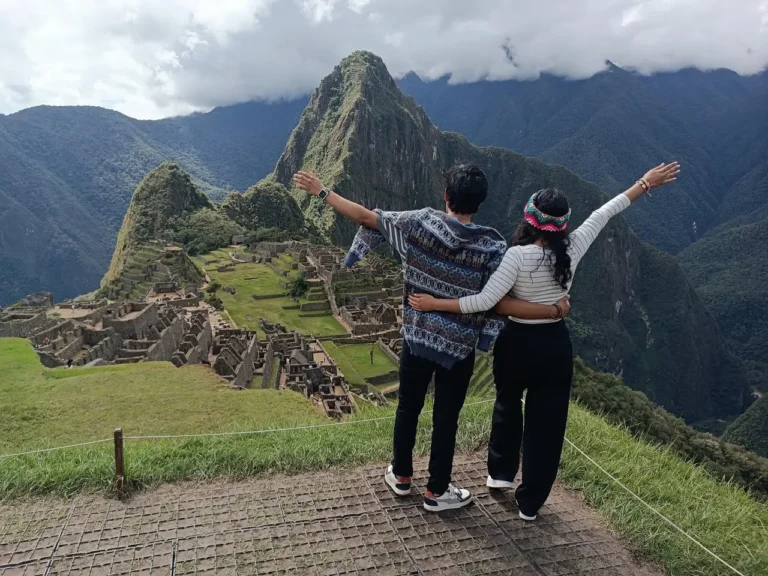
Classic access terrace and panorama — The first viewpoint from the upper terrace is the world's most photographed landscape: the citadel laid out below with agricultural terraces cascading down the mountainside, Huayna Picchu rising steeply behind the main structures, and the Urubamba Canyon falling 1,000 m on three sides. The panorama takes most first-time visitors a moment to process — photographs simply do not capture the scale.
Intihuatana — The "hitching post of the sun": a carved granite gnomon at the highest elevation of the ceremonial complex, used to track solstice and equinox positions. Machu Picchu's Intihuatana is the only one remaining in the Inca Empire — every other example was deliberately destroyed by the Spanish as a symbol of Andean religion. Its survival is directly due to Machu Picchu never being found by the colonizers.
Temple of the Three Windows — Three trapezoid windows overlooking the main ceremonial plaza. The walls use no mortar: each stone's edges are individually shaped to interlock with its neighbors. After six centuries of tropical humidity, freezing nights and dozens of earthquakes, not a single stone has moved.
Sun Tower (Torreón) — The only circular structure at Machu Picchu, built over a natural granite outcrop. Two windows are precisely aligned: one to the June solstice sunrise (around June 21, sunlight enters and hits an engraved line on the floor), the other to the December solstice. The Inca calendar was agricultural — accurate prediction of solstices determined when to plant, harvest, perform ceremonies and pay tribute.
Temple of the Condor — The Andean condor (Vultur gryphus), with a wingspan up to 3.2 m, was the Inca symbol of the upper world (Hanan Pacha). Here, a natural rock formation was carved to represent the condor's head and body, with two stone "wings" spread 6 meters — at full condor wingspan. Below: an underground chamber for ritual use.
Agricultural terraces — 700+ terraces built with a 3-layer drainage system (gravel → sand → topsoil) that prevents erosion on a 40-degree slope and creates distinct microclimates. Approximately 20 resident llamas maintain permanent territories on the lower terraces.
Key facts:
- Built ~1438 AD under Pachacútec, 9th Inca emperor
- Abandoned ~1540 — before the Spanish reached the Sacred Valley
- Overgrown for ~370 years
- Rediscovered July 24, 1911 by Hiram Bingham III (Yale)
- UNESCO World Heritage Site: 1983
- New Seven Wonders: 2007
~09:00–11:30 hrs — Free time for extended exploration, photography, or additional circuits.
~12:00 hrs — Bus down to Aguas Calientes. Buffet lunch (included). Afternoon free: Machu Picchu Museum (free with park ticket), artisan market, town center.
~14:30 or 17:00 hrs — Return tourist train Aguas Calientes → Ollantaytambo → tourist transport → Cusco.
~21:00 hrs — Arrival in Cusco. End of service.

What's included
Inclusions
-
Meals
- 1 night accommodation in Cusco (standard double room, breakfast)
- 2 buffet lunches (Day 2 Sacred Valley + Day 3 Aguas Calientes after Machu Picchu)
- 1 night accommodation in Aguas Calientes (standard room, breakfast)
-
Tickets & Permits
- Machu Picchu Archaeological Park entrance ticket
-
Guide
- MINCETUR bilingual guide on all 3 days
- Visit to Pisac artisan market and Inca ruins (guide included)
- Visit to Maras Salt Mines and Moray (guide included)
- Visit to Ollantaytambo Fortress (guide included)
-
Transportation
- Hotel pick-up and return Cusco
- All tourist transport Days 1–3
- Tourist train Ollantaytambo ↔ Aguas Calientes round trip (Expedition class)
- Consettur bus Aguas Calientes ↔ Machu Picchu round trip
-
Other
- First aid kit
Frequently Asked Questions
What is the difference between this 3-day tour and the 5-day package?
The 5-day package adds: airport transfers, 2 additional hotel nights in Cusco, Chinchero textile village, Maras and Moray as a separate full day, and optionally Rainbow Mountain. The 3-day tour focuses on one activity per day — City Tour, Sacred Valley, Machu Picchu — without the extensions. If you have 5+ days, the 5-day package covers more ground. If you have exactly 3 days or want a tighter itinerary, this 3-day structure is the right choice.
Why is the City Tour on Day 1 rather than Day 2 or 3?
The City Tour serves a dual function: it covers Cusco's monuments and also eases you into physical activity at 3,400 m altitude. Day 1 in Cusco is often still affected by soroche (altitude sickness). Placing the City Tour — a moderate walking tour at 3,400–3,700 m — on Day 1 provides acclimatization while doing something valuable, rather than resting in a hotel room. By Day 2 (Sacred Valley) and Day 3 (Machu Picchu at lower altitude), your body has adjusted.
Do I need the Tourist Pass BTP on Day 1 or Day 2?
Both days require the Tourist Pass BTP. On Day 1 (City Tour): Sacsayhuaman, Qenqo and Tambomachay require the BTP. On Day 2 (Sacred Valley): Pisac ruins, Moray and Ollantaytambo require the BTP. The BTP Parcial (~S/. 70 PEN) covers all these sites plus several others. It can be purchased at the first entrance of Day 1. Bring cash in soles — some sites don't accept cards.
Is the Sacred Valley on Day 2 rushed?
Day 2 visits 4 sites (Pisac, Maras, Moray, Ollantaytambo) in one day. The pace is efficient but not rushed — each site has 45–60 minutes, which is sufficient for a guided visit with key explanations. For travelers who want to spend more time at any individual site (particularly the Pisac ruins above the town, which can easily absorb 2–3 hours on their own), consider the dedicated Sacred Valley Full Day tour on a separate day before or after this package.
Can I add Rainbow Mountain to this 3-day package?
Yes — by adding 1–2 days. The recommended sequence for a 4-day version: Day 1 Cusco City Tour, Day 2 Rainbow Mountain, Day 3 Sacred Valley → train → Aguas Calientes, Day 4 Machu Picchu. For a complete 5-day package with Rainbow Mountain, airport transfers and full hotel, see our Cusco + Machu Picchu + Rainbow Mountain 5-Day Package.
How far in advance should I book?
Minimum 48 hours for the logistics. For Machu Picchu tickets: book as far ahead as possible — 30+ days ahead during high season (June–August, Easter, Christmas). The daily quota is strictly enforced and sells out weeks ahead in peak season. We check availability before confirming and accepting payment.
What if it rains on Day 2 or Day 3?
The Sacred Valley tour operates in all weather — Maras, Moray and Ollantaytambo are open year-round. Rain ponchos are recommended. Machu Picchu similarly operates 365 days/year in all conditions. Morning fog at Machu Picchu is common November–March and typically clears by 9:00–10:00 am. The citadel in mist is actually dramatic — many travelers prefer the rainy-season atmosphere.
Why book with Travel Peru Tours?
We are 100% local operators in Cusco. Our MINCETUR guides have specialist expertise at each site, not generic "Peru tour" guides. We handle train tickets, Machu Picchu entrance, hotels and all logistics in a single confirmed booking — no coordination risk. Contact us on WhatsApp to confirm availability for your travel dates.
Can’t find the answer to your question?
Get in touch with the experts at Travel Peru Tours for your inquiry.
Ask a questionTraveler reviews
Did you take this tour?
Share your experience with other travelers
Let our local experts help you plan your perfect adventure in Peru.
Write to us and we'll reply within 24 hours.
Related Tours
Related trips you might be interested in
Official endorsement
Associations & Certifications
We operate under the regulations and standards of Peru's leading tourism entities.