Cusco → 4 Lagoons → Qeswachaka Bridge → Rumiqolqa → Cusco
05:00 hrs — Hotel pick-up in Cusco (3,400 m)
The guide picks up participants at their hotels in Cusco's historic center. The minivan heads southwest on the Cusco–Sicuani highway, crossing the Anta valley before climbing into the high plateau of southern Cusco. Morning temperatures along this route in the altiplano can be -2°C to 5°C — dress in warm layers.
~07:00–11:00 hrs — The 4 Andean Lagoons (3,430–3,690 m)
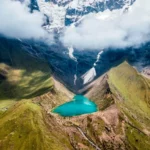
The southern Cusco plateau hosts four glacial-origin lagoons that the tour visits in sequence over approximately 3–4 hours of driving and stops. Each has its own character and wildlife.
Laguna Pomacanchi (3,690 m) — The largest of the four at 12 km², the name means "puma trapper" in Quechua. Its mirror-flat waters reflect the peaks of the Cordillera de Vilcanota when the sky is clear. Most importantly: Pomacanchi is the principal flamingo habitat of the Cusco region. During the rainy season (December–April), up to 200 Andean flamingos (Phoenicoparrus andinus) feed in the shallows, their pink-white plumage and 120 cm wingspan unmistakable from the shore. Even in dry season, resident flocks of 20–50 individuals are common. Stop: 15–20 minutes for photography and bird observation.
Laguna Acopia (3,430 m) — The most biodiverse lagoon of the circuit, its extensive reed beds hosting a wider range of species than Pomacanchi. Regular species include the Puna ibis (Plegadis ridgwayi, iridescent dark-green plumage), the Andean teal (Anas flavirostris), the Great egret (Ardea alba), the Puna plover (Phegornis mitchellii) and the Andean coot (Fulica ardesiaca). The Acopia community maintains an artisanal trout fishery along the lake's edges. Stop: 10–15 minutes.
Laguna Asnaqocha — Transliteral Quechua name: "lake with a smell" — likely from sulfurous deposits on the bottom that on certain days produce visible bubbles at the surface. The smallest of the four, surrounded by volcanic grey-slate rock formations that contrast sharply with the green totora reeds. Primarily a scenic stop; observation from the road.
Laguna Pampamarca — Located in Tungasuca district, a name that resonates through Peruvian history: a few kilometers from the lake, in Tinta, the rebel leader José Gabriel Condorcanqui was born in 1742. Known as Túpac Amaru II, he led the largest indigenous uprising of the colonial period (1780–1781) before being captured and executed by Spanish authorities in Cusco's Plaza de Armas. The guide contextualizes this history during the stop: the landscape of the southern highlands is inseparable from the memory of the anti-colonial resistance. Brief stop with guide explanation.
~11:30 hrs — Descent to the Qeswachaka Bridge (3,700 m)
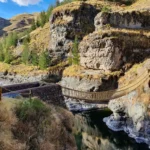
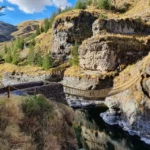
A dirt road descends from the plateau toward the Apurímac canyon. As the road winds downward, the canyon walls appear — deep red rock dropping 50 meters to the river below. The Apurímac River running at the bottom is more than a scenic feature: tracing its headwaters upstream leads to Nevado Mismi (5,597 m), which GPS measurements since 2001 confirm as the most remote source of the Amazon River — the origin of the longest river on Earth begins here, in these mountains.
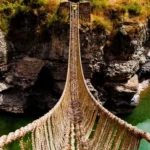
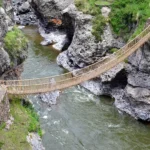
The bridge comes into view from the road above: a thread of woven grass suspended between two canyon walls, swaying gently in the Andean wind.
~11:30–13:00 hrs — The Qeswachaka Bridge
At the bridge site, the guide explains the construction technique, the role of each community and the spiritual significance of the annual renewal. The entrance fee is paid directly at the site (~S/. 10–15 PEN, not included in the tour price).
Crossing the bridge
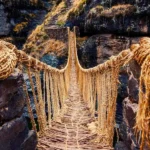
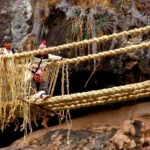
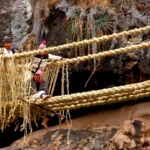
The bridge is 28 meters from one canyon wall to the other, 1.20 meters wide. Standing on it, the structure sways visibly over the 50-meter drop to the Apurímac. The woven ichu fiber creaks under foot. No special physical condition is required — but nerve is. Most visitors cross twice (there and back), holding the side ropes and looking forward rather than down. Children over 8 years old and older adults cross regularly without incident.
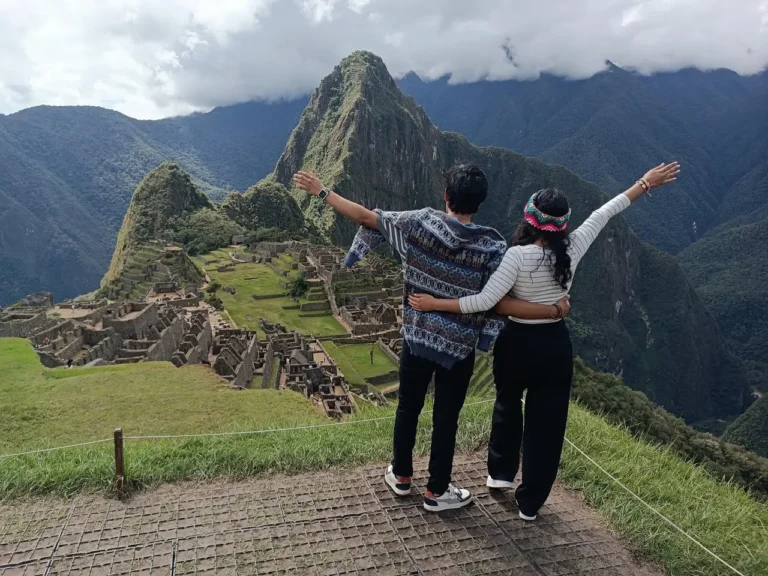
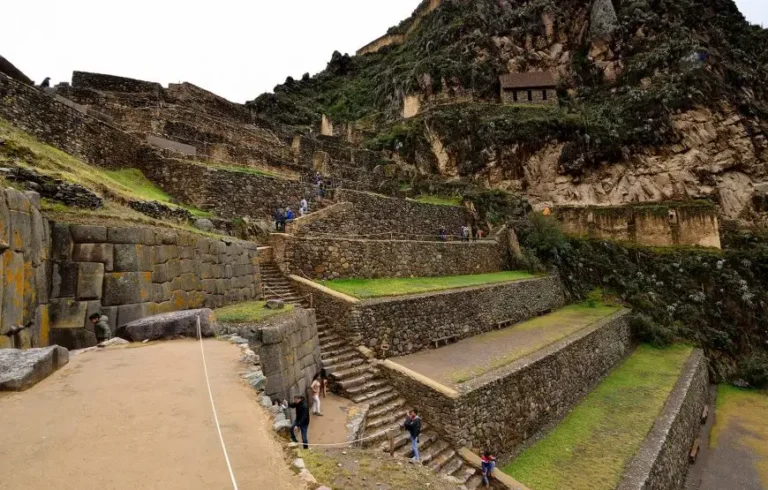
This is unlike any Inca site in Peru. Machu Picchu, Sacsayhuaman, Ollantaytambo — all are ruins. The Qeswachaka is a living artifact, in active use, built last year with the same hands and techniques as five centuries ago. The sensation of walking on a rope bridge that connects the present to the 15th century is difficult to replicate anywhere in the world.
~12:30 hrs — Box Lunch near the bridge
Box lunch served near the Qeswachaka site with views over the Apurímac canyon. Contents: sandwich or main dish, fruit, juice.
~13:30 hrs — Rumiqolqa Archaeological Site (~3,350 m)
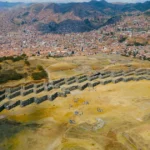
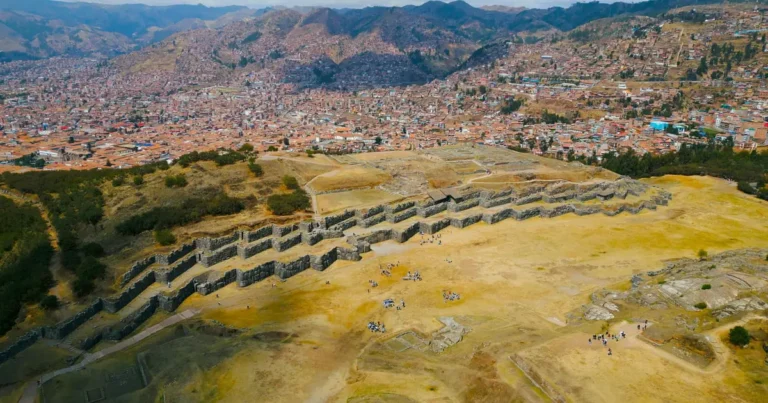
On the return route toward Cusco, the tour stops at Rumiqolqa — the Inca (and pre-Inca) stone quarry in Quiquijana district that most operators skip entirely. Rumiqolqa is where the Incas extracted the green-grey andesite used in the construction of the Qoricancha (Temple of the Sun) and the cyclopean walls of Sacsayhuaman.
The quarry exposes something no museum display can replicate: the actual marks of Inca stone-cutting — perfect linear incisions in living rock, made with stone tools without metal, in blocks weighing multiple tons. Here you can see unfinished extraction cuts, abandoned stone blocks and evidence of the transport systems used to move raw andesite dozens of kilometers to Cusco without the wheel or draft animals. The guide explains the Mit'a system — the mandatory collective labor that mobilized thousands of workers from across the empire to build Cusco's monuments.
Stop: 20–30 minutes with guide explanation.
~18:00 hrs — Return to Cusco
Arrival at Plaza San Francisco in Cusco's historic center. End of service.