Choquequirao Trek 4 Days: The Inca’s Hidden City (2026)
-
Availability Daily departures
-
Transport Hotel pickup
-
Languages Spanish, English
-
Service type Not specified
-
Cancellation policy Not specified
-
Maximum altitude 3,800m (12,467 ft) m.s.n.m.
About this activity
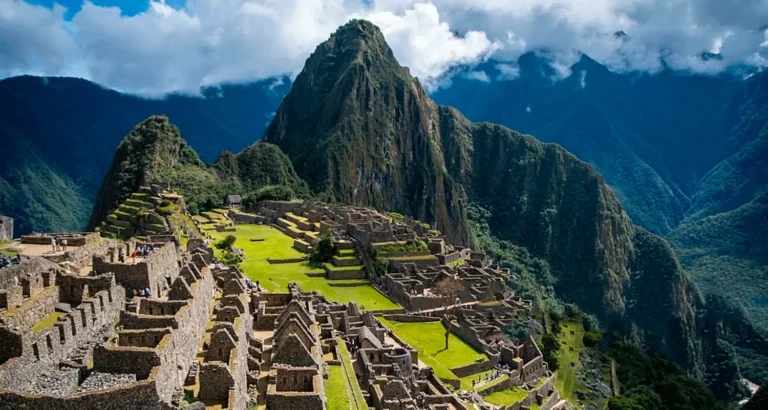
The Choquequirao Trek takes you to the only major Inca citadel in Peru that can only be reached on foot — no train, no bus, no helicopter, no cable car. Choquequirao (“Cuna de Oro” — Cradle of Gold in Quechua) sits at 3,085 meters above sea level, three times larger in area than Machu Picchu, currently receiving fewer than 100 visitors per day. Our 4-day trek covers 55 km through the depths of the Cañón del Apurímac — one of the deepest river canyons in South America — to reach a citadel that the last free Inca used as his final refuge against the Spanish. From $350 USD per person, with lodging in guesthouses (not camping) and all meals included.
A narrow window. A cable car connecting Choquequirao to the town of Kiuñalla has been approved and is in development. When it opens, daily visitor numbers will jump from ~100 to potentially several thousand. The experience of hiking to an empty, fog-covered Inca city surrounded by condors exists right now — and probably not for much longer.
Why Choose This Tour?
- Capuliyoc viewpoint (3,800m) — first panorama of the Apurímac Canyon
- Crossing the Apurímac River (~2,050m)
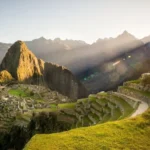
- Choquequirao citadel (3,085m) — the Incas’ hidden city
- Llama terraces — unique carved relief figures
- 3+ hours guided tour of the entire archaeological complex
Itinerary
Day 01
Cusco → Cachora → Capuliyoc → Playa Rosalinas
04:00-04:30 h — Hotel pickup in Cusco. Private transport approximately 4 hours southwest toward Abancay, turning off at Cachora village. Important: there are no ATMs in Cachora or on the trail — bring all necessary cash in Soles from Cusco. Breakfast en route.
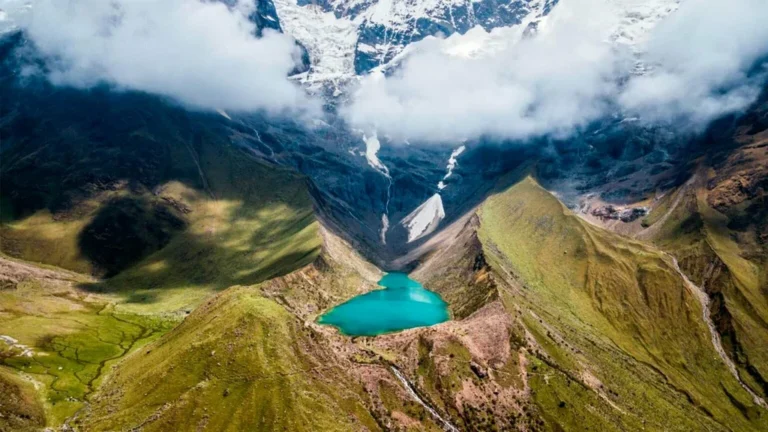
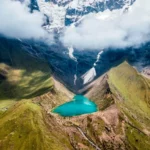
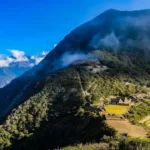
Trek begins at Cachora and immediately climbs to the Capuliyoc viewpoint (3,800m): the first panoramic view of the Cañón del Apurímac. The canyon walls drop nearly 3,000 meters from ridge to river. Somewhere in the distant cliff face, Choquequirao is visible as a pale geometry of terraces against the green canyon wall.
From Capuliyoc, the descent begins — 1,750 meters of elevation loss over approximately 6 km of steep switchbacks. The vegetation changes from Andean scrub to subtropical cloud forest as you descend: increasing temperature, higher humidity, orchids and bromeliads on the trail walls.
River crossing at Playa Rosalinas (~2,050m), then a short uphill to the guesthouse at Chikisca. First night in a basic but real bed. Dinner included. (~18 km, ~8-9 hours)
Accommodation: Guesthouse at Chikisca or Playa Rosalinas, basic rooms with shared facilities.
Day 02
Chikisca → Santa Rosa → Marampata
The uphill day. From the river crossing, the trail climbs steadily through cloud forest and open scrub toward the rim of the canyon on the Choquequirao side.
Santa Rosa (~2,600m) — a small community and guesthouse halfway up, with views back across the canyon. Minor Inca terraces visible along the approach trail. Lunch.
Continue to Marampata (~2,900m) — the last settlement before the ruins, positioned on a ridge with the first direct viewpoint down onto the Choquequirao complex. On a clear afternoon, the terraces and the main plaza are visible from Marampata before you've even arrived. Dinner and second night. (~16 km, ~7-8 hours)
Accommodation: Guesthouse at Marampata — the views from the terrace at sunset are a preview of what you'll explore tomorrow.
Day 03
Full Day at Choquequirao Citadel
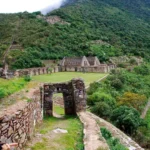
The day everyone came for. A 30-minute descent from Marampata brings you to the main entrance of Choquequirao (3,085m). The full guided tour takes 3-4 hours minimum.
The main complex includes:
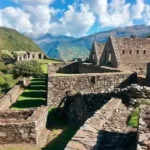
- Usnhu Plaza — the central ceremonial platform where Inca rituals were conducted. The trapezoidal architecture, perfectly fitted stonework, and aligned doorways are immediately evident. Unlike Machu Picchu, you can walk across the plaza without crowd management ropes.
- Temple of the Sun — the primary religious structure, oriented toward the sunrise over the canyon. The finest stonework in the complex.
- Kallanka (great hall) — the long stone building used for ceremonies and royal gatherings, characteristic of all major Inca administrative centers.
- Water channels — the Inca hydraulic system is intact and, in some sections, still flowing. The engineering precision — distributing water across a cliff-side complex with zero right angles — remains extraordinary.
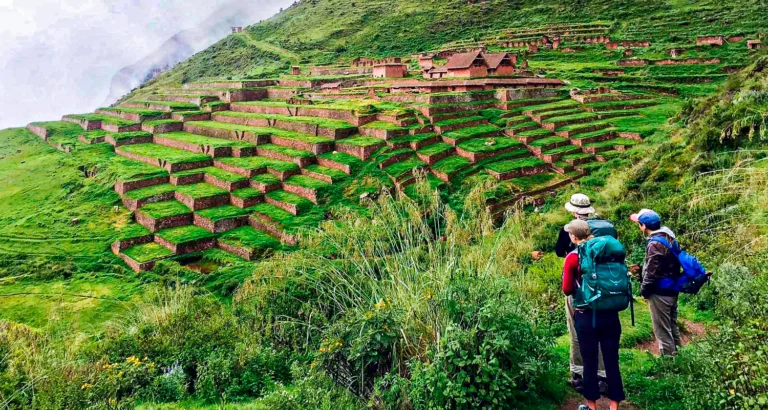
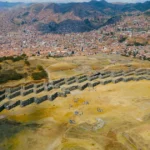
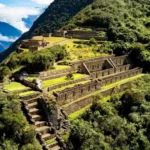
- Agricultural terraces — Choquequirao's most extensive feature. The terraces cascade down the canyon walls in multiple tiers, covering an area too large to see in a single glance.
- The Llama Terraces — the defining unique element of Choquequirao. On the lower western terraces, white limestone figures of llamas are set in relief against the dark stone of each terrace step. Approximately 12-15 llama figures survive, walking in procession from top to bottom. This decorative technique does not exist anywhere else in Inca architecture. Archaeological interpretation: the llamas represent a ritual offering to the mountain Apus, asking for water (the river below) and fertility (the terraces above).
- Capuliyoc sector — a separate area with more terraces and outlying structures, reached by a 30-minute walk from the main plaza. The views across the canyon from this sector are among the most expansive in the entire site.
Condors. The updrafts above the Apurímac canyon create ideal thermal conditions for Andean condors. During the full-day visit at the ruins, condor sightings are common — the birds can be observed circling the canyon walls at close range, occasionally passing below your viewpoint on the terraces.
After the full tour, afternoon free time to explore independently, re-visit sections, or simply sit in the main plaza and process the fact that you are alone in a lost city.
Return to Marampata for dinner and third night.
Day 04
Marampata → Chikisca → Cachora → Cusco
The return — the same route in reverse. Descend from Marampata to the river crossing, then make the long climb back up to Cachora. This day is the test of legs: the cumulative ascent on the return, after three days of trekking, is the most physically demanding moment for many participants.
~12:00-13:00 h — Lunch in Cachora.
~13:30-14:00 h — Transport departs Cachora for Cusco. Arrival ~18:00-20:00 h. End of service. (~16 km, ~7 hours)
What's included
Inclusions
-
Meals
- 3 breakfasts + 3 lunches + 3 dinners + 3 afternoon snacks
-
Tickets & Permits
- Choquequirao Archaeological Park entrance fee
-
Guide
- Bilingual guide certified by MINCETUR (full 4 days)
-
Transportation
- Hotel pickup and private transport Cusco → Cachora → Cusco
- Emergency horse (available if you need gear transport due to injury or exhaustion)
-
Accommodation
- 3 nights in trail guesthouses (twin shared rooms, shared bathroom)
-
Other
- First aid kit + emergency oxygen
Frequently Asked Questions
Is the Choquequirao Trek suitable for beginners?
With 2+ nights of Cusco acclimatization and good physical fitness (ability to hike 7-9 hours), yes. The altitude is manageable (maximum 3,800m briefly, mostly at 2,050-3,085m). The challenge is physical endurance — specifically, 1,750 meters of elevation change each way over steep terrain. If you regularly hike or exercise 3-4 times per week, you can do this trek.
How does it compare to the Salkantay Trek?
Different in almost every way. The Salkantay reaches higher altitude (4,600m vs. 3,800m), features more ecosystem variety (jungle, glacier, cloud forest), and ends at Machu Picchu. The Choquequirao trek has lower altitude but more dramatic elevation change per kilometer, a much less visited destination, and direct access to a more historically significant (and largely unexcavated) site. Many serious trekkers do both, treating them as complementary rather than interchangeable.
Will there be other people at the ruins?
Very few. On an average day, Choquequirao receives 50-100 visitors — compared to 4,500 daily at Machu Picchu. Your group will likely have the Llama Terraces and the main temple to itself for extended periods. This changes every year as the site becomes more widely known — and will change dramatically when the planned cable car opens.
What is the planned cable car?
A cable car project connecting the village of Kiuñalla to Choquequirao has been approved by the Peruvian government and is in development. When operational, it will allow visitors to reach Choquequirao in approximately 15 minutes, making the 4-day trek unnecessary for most tourists. The current timeline is uncertain — the project has been delayed multiple times — but the directional trend is toward eventual mass tourism access.
What's the best time of year to visit?
June-August offers the most reliable weather (dry season) with excellent visibility for the views from Capuliyoc and the full panorama of the citadel. Avoid December-February. May and September are excellent shoulder season options with fewer groups and similar conditions.
Do I need a sleeping bag?
No. Our tour uses guesthouses at each stop (Chikisca, Marampata) with beds and blankets provided. You don't need a sleeping bag — this is a key difference from the Salkantay and Ausangate treks, which require full camping gear. Bring a light sleeping liner if you sleep cold.
Is there WiFi or mobile signal on the trail?
Mobile signal exists at Cachora (start/end point) and at Choquequirao itself. There is no WiFi on the trail. Expect full disconnection for Days 1-3.
Can children do this trek?
Children aged 8+ are eligible for the student entrance discount. The physical demands (7-9 hours per day over steep terrain) require good base fitness even for adults — we recommend this trek for children who are comfortable with long hiking days. Minimum group size is 3 people, so family bookings of 3+ work well.
Can’t find the answer to your question?
Get in touch with the experts at Travel Peru Tours for your inquiry.
Ask a questionTraveler reviews
Did you take this tour?
Share your experience with other travelers
Let our local experts help you plan your perfect adventure in Peru.
Write to us and we'll reply within 24 hours.
Related Tours
Related trips you might be interested in
From
$350 USD
Official endorsement
Associations & Certifications
We operate under the regulations and standards of Peru's leading tourism entities.