Classic Inca Trail 4 Days: Complete Guide + Permits 2026
-
Availability Daily departures
-
Transport Hotel pickup
-
Languages Spanish, English
-
Service type Not specified
-
Cancellation policy Not specified
-
Maximum altitude 4,215m (13,829 ft) m.s.n.m.
About this activity
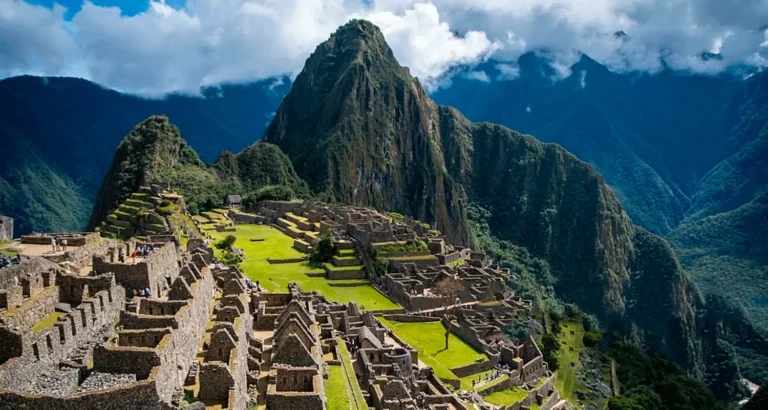
The Classic Inca Trail 4 days is the only trekking route in the world that passes through six functioning archaeological sites before arriving at a seventh — Machu Picchu. The 44 km path from KM 82 to the citadel follows the original Inca road that Pachacutec’s architects paved in the 15th century, entering Machu Picchu at dawn through the Sun Gate (Inti Punku) from above — the single most dramatic approach to any archaeological site in the Americas. From $680 USD per person, permits included.
Why permits make this complicated: Only 500 people total (tourists + guides + porters + cooks) are permitted on the Inca Trail per day. Tourist spots number approximately 200. These sell out within minutes of going on sale — often 4-6 months before the trek date. We handle the permit booking as part of our service. You need to book early. There is no waitlist.
Why Choose This Tour?
- Llactapata ruins (Day 1) — first Inca site
- Dead Woman’s Pass — 4,215m (13,829 ft)
- Wiñay Wayna (Day 3) — Inca ceremonial complex
- Inti Punku / Sun Gate — first view of Machu Picchu from above
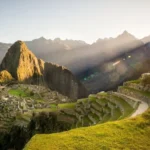
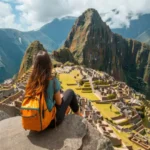
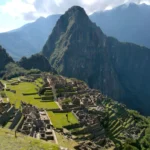
- Machu Picchu (Day 4) — entered at dawn via the original Inca entrance
Itinerary
Day 01
KM 82 → Llactapata → Wayllabamba (3,000m) — The Easy Day
05:30 h — Hotel pickup in Cusco. Transport by bus to Ollantaytambo, then by train to the starting point at KM 82 railway station (Pisacucho, 2,650m). Passport check and permit control at the trailhead. The trail begins.
The first day follows the Vilcanota River valley upstream — relatively flat terrain by Inca Trail standards, passing through cloud forest and farmland. The first archaeological site appears within 2 hours:
Llactapata — "flat town above" in Quechua. Agricultural terraces built to supply passing pilgrims, positioned to see the entire valley behind you. The ruins are modest in scale but mark the transition from the modern world to the Inca corridor.
Continue through subtropical forest (orchids, hummingbirds, mosses on the trees) to camp at Wayllabamba (3,000m). The last village before the high trail. Dinner at camp. (~12 km, ~5-6 hours)
Day 02
Dead Woman's Pass (4,215m) → Pacaymayo — The Hardest Day
05:30 h — Early start. This is the most physically demanding day of the trek: approximately 16 km with 1,200 meters of elevation gain to the highest point on the route.
From Wayllabamba, the trail climbs through high-altitude grassland and then bare rock toward the ridge. The final approach to Warmiwañusca (4,215m / 13,829 ft) — Dead Woman's Pass — is steep and relentless. The name has two origins: either the mountain's silhouette resembles a reclining woman from certain angles, or it simply refers to the fact that this pass historically left travelers exhausted.
At the pass: 360° views of the surrounding Andes, the valley you climbed from behind you, and the deeper valley ahead. The altitude is real — this is 615 meters higher than Salkantay Pass on the Salkantay Trek is... wrong. Actually, the Salkantay Pass is at 4,600m and Dead Woman's Pass is at 4,215m, so Salkantay is higher. Let me revise: at 4,215m, you're at higher altitude than Mont Blanc's summit base camp.
Descent to Pacaymayo (3,600m) — the trail drops steeply on stone steps after the pass. Arrive at camp for dinner and the second night. (~16 km, ~8-9 hours)
Day 03
Runkurakay → Sayacmarca → Phuyupatamarca → Wiñay Wayna — The Archaeological Day
The most rewarding day — five archaeological sites and the most varied terrain of the trek.
Runkurakay (3,760m) — "egg-shaped ruin" or "basket-shaped house." A circular watchtower positioned to overlook both the ascending trail from Pacaymayo and the descent to Sayacmarca. The curved walls are unusual in Inca architecture. The site functioned as a tambo — a resting and supply station on the royal road network.
Second pass — 3,998m. The trail crests a second (easier) pass with views across the Vilcabamba range to the south.
Sayacmarca (3,624m) — "inaccessible town." This is the most dramatically positioned site on the entire trail: a complex of buildings perched on a narrow rocky promontory, accessible only via a steep stone staircase cut into the cliff. The site was both a religious center and a waystation, positioned to control access along the corridor.
Phuyupatamarca (3,600m) — "town above the clouds." This site has the best-preserved Inca fountain system on the entire trail — five cascading stone fountains that still carry water, used in ritual cleansing ceremonies during pilgrimages. On mornings when cloud fills the valley below, the site genuinely appears to be above the clouds.
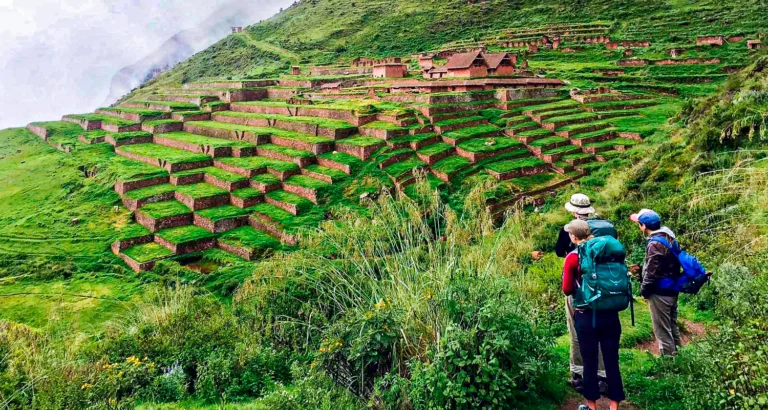
Intipata (3,100m) — "sun terrace." Dramatic agricultural terraces constructed on an almost vertical slope, oriented to maximize sun exposure. The engineering required to build level terraces on a 45-degree hillside is striking.
Wiñay Wayna (2,700m) — "Forever Young." The largest and most complex archaeological site on the trail after Machu Picchu itself — a ceremonial complex with terraced agriculture, residential quarters, ritual fountains, and temple structures overlooking the Urubamba valley. The name refers either to the orchid species that grows here (Epidendrum secundum, called Wiñay Wayna) or to the idea of eternal youth connected to the spring water. Camp here for the third and final night. (~16 km, ~7-8 hours)

Day 04
Inti Punku (Sun Gate) → Machu Picchu → Return to Cusco
03:30 h — Wake up, pack camp, breakfast. The final stretch departs before dawn to reach the Sun Gate at sunrise.
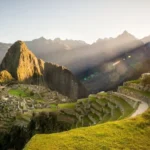
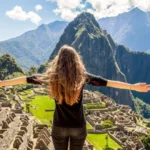
05:30-06:00 h — Arrival at Inti Punku (Sun Gate, 2,720m): the original main entrance to Machu Picchu, carved into a ridge above the citadel. On June 21st (winter solstice), the rising sun passes exactly through this gate and illuminates the Intihuatana stone below — the most significant astronomical alignment in Inca architecture. On any clear morning, this first view of Machu Picchu — far below, wrapped in cloud, the mountains behind it — is the payoff for 43.5 km of walking.
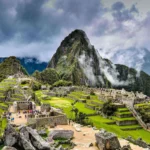
07:00-07:30 h — Arrival at Machu Picchu main entrance. Guided tour 2-2.5 hours: Temple of the Sun, Intihuatana, Temple of the Three Windows, agricultural sector, and the Royal Quarters. Your guide contextualizes Machu Picchu using everything you've seen along the trail — the fountains at Phuyupatamarca, the terrace engineering at Intipata, the watchtower at Runkurakay — all appear at larger scale here.
Afternoon — Free time to explore independently. Bus down to Aguas Calientes (~25 min, included). Lunch on your own.
Train Aguas Calientes → Ollantaytambo. Bus Ollantaytambo → Cusco. Arrival ~22:00 h. End of service.
What's included
Inclusions
-
Meals
- 3 breakfasts + 3 lunches + 3 dinners + afternoon snacks + coca tea
- Boiled water for refilling bottles
-
Tickets & Permits
- Inca Trail permit (government permit, limited — booked by us in advance)
- Machu Picchu entrance ticket
-
Guide
- Bilingual guide certified by MINCETUR (full 4 days)
-
Transportation
- Private transport Cusco → Ollantaytambo → KM 82 and return
- Train KM 82 → Aguas Calientes → Ollantaytambo (return)
- Consettur bus Machu Picchu → Aguas Calientes (descending)
-
Equipment
- Professional cook + kitchen equipment
- Porter service for group camping equipment
- Full camping equipment (dome tents for 2, sleeping mats, dining tent)
-
Accommodation
- Pre-trek briefing in Cusco (the night before departure)
-
Other
- First aid kit + radio transmitter
Frequently Asked Questions
How far in advance do I need to book the Inca Trail?
For June, July, and August departures, 4-6 months is the realistic minimum. These permits sell out in minutes when released. For April, May, September, and October, 2-3 months is usually sufficient. January, March, November, and December have better availability with 1-2 months notice. February is closed entirely.
Can I do the Inca Trail if I've never trekked before?
Yes, with adequate preparation. Day 2 (Dead Woman's Pass, 4,215m) is the main challenge — it requires good cardiovascular fitness. If you exercise regularly (running, cycling, gym 3x per week), you can complete the Inca Trail. We strongly recommend training with loaded hikes (7-10 kg backpack) for 2-3 months before the trek.
What is Dead Woman's Pass?
The highest point on the Inca Trail — 4,215m (13,829 ft), known in Quechua as Warmiwañusca. "Warmi" = woman, "wañusca" = dead. The pass is named either for the silhouette of the ridge, which resembles a reclining female figure from the valley below, or simply for the exhaustion it historically produced in travelers. The ascent takes approximately 3-4 hours from the overnight camp and covers 1,200 meters of elevation gain.
Why does the Inca Trail close in February?
The Peruvian government mandates a complete closure of the Inca Trail every February for ecological maintenance, trail repair, and vegetation recovery. This coincides with the heaviest rains of the year. No exceptions are made — we cannot offer the Classic Inca Trail during this month.
Can I hire a personal porter?
Yes — at an additional cost of $80-90 USD. A personal porter carries up to 8 kg of your gear (typically your sleeping bag, extra clothes, and snacks), so your daypack stays light (2-3 kg). This significantly reduces the physical demand of Days 1-3. We recommend personal porters for those who haven't trekked before.
What's included in the price that competitors charge extra for?
Our $680 price includes the Inca Trail government permit (value $192 USD), Machu Picchu entrance ticket, all camping equipment, all meals, return train ticket, and bilingual guide. Some operators list lower headline prices but charge separately for the permit and entrance — always compare total, all-in costs.
What happens if it rains?
The trail operates in all weather except extreme safety situations. Rain on the Inca Trail is a normal experience — the cloud forest sections of Day 3 are wet ecosystems, and afternoon showers are common even in the dry season. Good waterproof jacket and pants are not optional equipment. The stone paving becomes slippery when wet — this is when trekking poles become critical.
Can I enter Machu Picchu via the Sun Gate on a group tour?
Yes. Our tour specifically times the Day 4 departure (03:30 h) to reach the Sun Gate at sunrise — this is the most important logistical detail of the entire 4-day itinerary. The Sun Gate view of Machu Picchu at dawn, with cloud clearing as the sun rises, is the moment all the trekking exists to produce.
Can’t find the answer to your question?
Get in touch with the experts at Travel Peru Tours for your inquiry.
Ask a questionTraveler reviews
Did you take this tour?
Share your experience with other travelers
Let our local experts help you plan your perfect adventure in Peru.
Write to us and we'll reply within 24 hours.
Related Tours
Related trips you might be interested in
From
$680 USD
Official endorsement
Associations & Certifications
We operate under the regulations and standards of Peru's leading tourism entities.