Inca Jungle Trail 3 Days to Machu Picchu: Cycling, Hiking & Zipline (2026)
-
Availability Daily departures
-
Transport Hotel pickup
-
Languages Spanish, English
-
Service type Not specified
-
Cancellation policy Not specified
-
Maximum altitude 4,350m (14,272 ft) m.s.n.m.
About this activity
The Inca Jungle Trail to Machu Picchu is the adventure alternative to the Classic Inca Trail — a 3-day route that combines four completely different activities: mountain biking downhill from a 4,350m Andean pass, trekking through subtropical cloud forest, zip-lining above a tropical river gorge, and finally arriving at Machu Picchu via the same riverside trail used by workers and traders during the Inca period. The route descends from the cold high Andes to the jungle-adjacent cloud forest in a single day, dropping 2,750 vertical meters by bike before the walking begins.
Unlike the Classic Inca Trail, the Inca Jungle Trail requires no advance permit booking — the route does not cross SERNANP-managed Inca Trail sections until the approach to Machu Picchu. It can be arranged with 1–2 weeks’ notice and is available year-round. It is the most popular alternative trekking route to Machu Picchu for travelers who want an active, multi-sport experience rather than an archaeological walking journey.
Price: $550 USD per person. Mountain bikes, zip-line, 2 nights hotel, train, Machu Picchu entrance, and all meals from Day 1 lunch included.
Why Choose This Tour?
- Abra Málaga (4,350m) — cycling start, mountain pass
- Santa María (1,600m) — overnight after 65 km descent
- Santa Teresa (1,545m) — zipline, hot springs
- Hydroelectric Station (1,770m) — start of Inca Trail section
- Aguas Calientes (2,040m) — overnight hotel
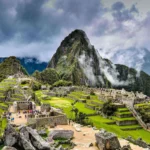
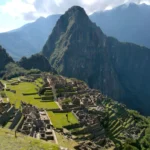
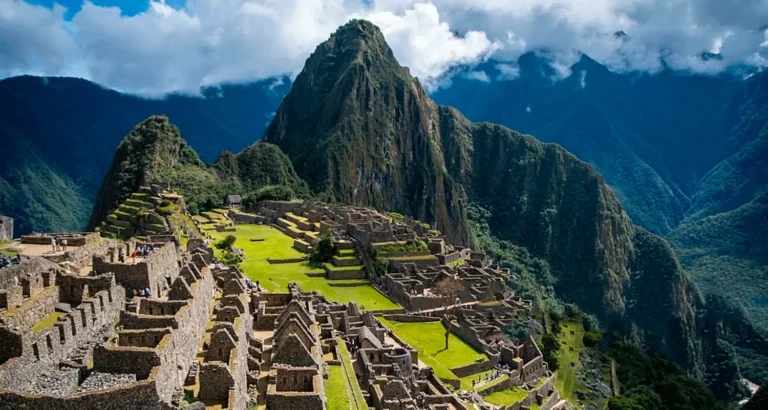
- Machu Picchu (2,430m) — full guided tour
Itinerary
Day 01
Cusco → Abra Málaga → Cycling Descent → Santa Teresa → Zip-line → Overnight Santa María / Santa Teresa
05:00 h — Hotel pickup in Cusco. Private transport northwest through the Sacred Valley, past Ollantaytambo, and climbing toward the Abra Málaga pass (4,350m) — a 3-hour drive through progressively more alpine terrain. The road follows the valley of the Urubamba River upstream to its headwaters before crossing the Continental Divide.
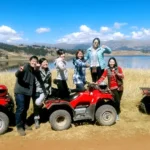
~08:00 h — Abra Málaga (4,350m). Mountain bikes, helmets, gloves, and knee pads distributed. A brief safety briefing from the guide covers braking technique, road positioning, and speed management on the descent. No previous mountain biking experience is required; the route is a sealed road with a dedicated descent lane, but competence on a bike is expected. Children under 14 are not recommended.
08:30 h — Cycling begins. The descent from Abra Málaga to Santa María covers 65 km and 2,750 vertical meters in approximately 4 hours at a moderate pace. The road switchbacks down the western Andes slope through five distinct ecosystems:
High puna (4,350–3,800m): Cold, open grassland with ichu grass, Polylepis trees, and occasional herds of alpacas. Views back toward the Cusco valley and the distant snowfields of the Vilcabamba range.
Dwarf Andean forest (3,800–3,200m): Queñua (Polylepis) woodland, bromeliads on the rock walls, and the first hummingbirds. The road enters the Bosque de Protección de Tambopata catchment.
Cloud forest (3,200–2,400m): Dense canopy begins, the temperature rising noticeably with each 100m of descent. Tree ferns, orchids, mosses, and the first of the subtropical bird species. Waterfalls visible from the road.
Subtropical transition (2,400–1,800m): Bamboo, banana plants, and increasingly tropical vegetation. The air becomes warm and humid.
Subtropical valley (1,800–1,600m): Full subtropical forest at the valley floor, with the Apurímac River system audible below. Santa María is visible ahead.
Lunch is served in Santa María — a hot meal cooked by the support team.
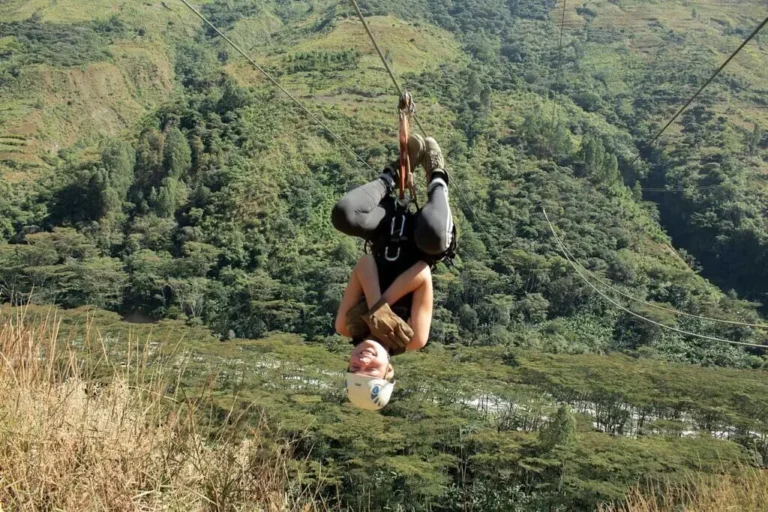
~14:00 h — Santa Teresa (1,545m) and zip-line. After Santa María, a 30-minute transfer (or optional additional 7 km bike section) leads to the zip-line station above the Urubamba gorge near Santa Teresa. The zip-line consists of 5–7 lines in sequence, the longest approximately 400m at heights of 50–80m above the river.
~16:00 h — Optional: Cocalmayo Hot Springs. The geothermal springs at Cocalmayo, 3 km from Santa Teresa at 1,600m, are among the best natural hot springs in the Cusco region — 32–40°C pools in a tropical setting ($5–8 USD, not included). The contrast between the day's activity and a riverside hot spring at jungle altitude is considerable.
~17:00–18:00 h — Hotel in Santa Teresa or Santa María. Dinner included.
Hotel night 1: Santa Teresa or Santa María (~1,545–1,600m)

Day 02
Santa Teresa → Hydroelectric Station → Aguas Calientes (on foot)
07:00 h — Breakfast at hotel.
08:00 h — Transport from Santa Teresa to the Hydroelectric Station (Central Hidroeléctrica, 1,770m) — approximately 45 minutes by vehicle along a dirt road through the Santa Teresa valley. The Hydroelectric Station is a working hydroelectric plant that also functions as an informal train stop and the beginning of the on-foot approach to Aguas Calientes.
~09:00 h — Walk to Aguas Calientes begins. The Hydroelectric to Aguas Calientes trail is 10 km, primarily flat, following the train line through tropical cloud forest along the Urubamba River valley. This section of trail was a major access route before the train monopolized Machu Picchu access; local traders, workers, and community members from Santa Teresa and Santa María still use it regularly.
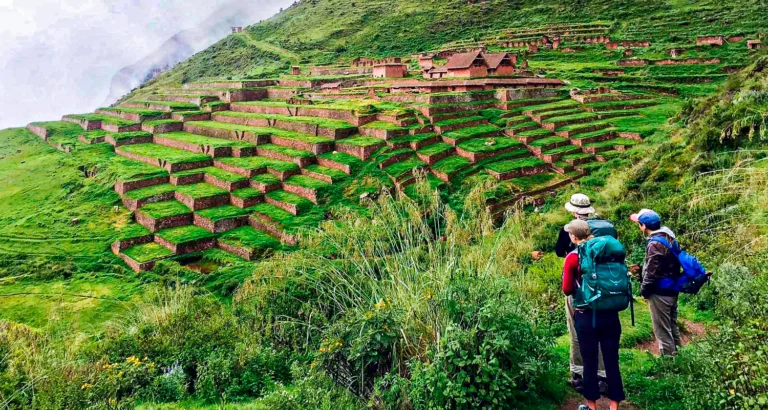
The walk takes 2.5–3 hours at a comfortable pace. The cloud forest here is lush year-round — humidity from the river, moderate temperatures (15–22°C), and the abrupt topography of the gorge create ideal conditions for tropical-subtropical flora. Orchids, bromeliads, and tree ferns are dense on the slopes above the trail. The canyon walls are vertical; the train tracks are carved directly into the cliff face in several sections, and the walking trail runs at river level below.
Wildlife regular on this section: cock-of-the-rock (Rupicola peruvianus — Peru's national bird, vivid orange, found in this exact elevation zone), various tanager species, and — if you are quiet — the occasional glimpse of a cock-of-the-rock's display ground (lek) on the mossy cliff faces.
~12:00 h — Aguas Calientes (Machu Picchu Pueblo, 2,040m). Hotel check-in. Lunch on your own (various restaurants on the main street and along the river). Afternoon free. The town is entirely dedicated to Machu Picchu tourism; the main street has a good selection of restaurants, the hot springs (Baños Termales, S/. 30 PEN) are at the top of the street, and the souvenir market is directly below the bus station.
Briefing with your guide in the evening (30 minutes) about the Machu Picchu tour structure for Day 3.
Hotel night 2: Aguas Calientes (~2,040m)
Day 03
Aguas Calientes → Machu Picchu → Train → Cusco
05:00 h — Breakfast at hotel.
05:30 h — Bus from Aguas Calientes to Machu Picchu entrance (25 minutes). First morning entry group — arriving before most day-trippers from Cusco.
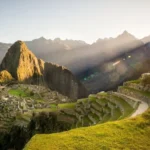
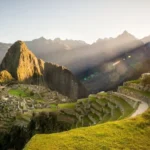
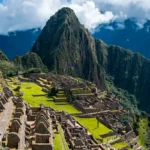
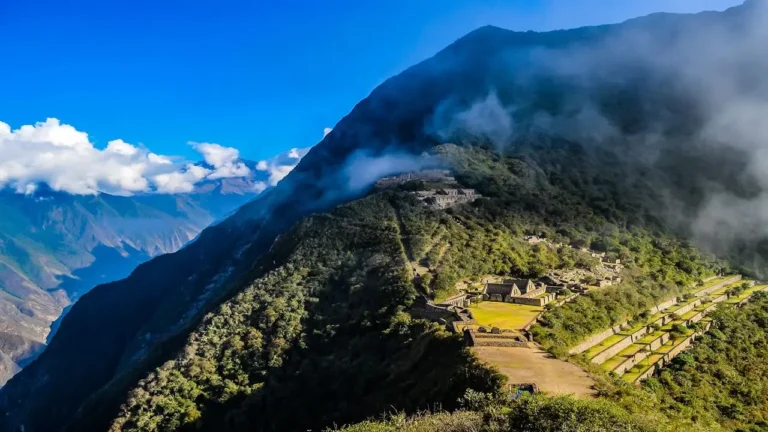
~06:00 h — 2.5-hour guided tour of Machu Picchu. Sites covered in the standard Circuit 2 route: Intihuatana stone (the only unbroken solar gnomon in Peru, aligned to the June 21 solstice sunrise), Temple of the Sun (semicircular tower with a trapezoidal solstice-alignment window), Royal Tomb, Principal Temple, Temple of the Three Windows, Sacred Plaza, agricultural terraces, urban and industrial sectors.
Context your guide provides: Pachacútec (the builder, 9th Sapa Inca, r. 1438–1471 CE) chose this specific mountain saddle because of its astronomical properties — the surrounding peaks create a natural calendar of solar and stellar alignments visible from the site. The entire citadel is oriented to these alignments. Machu Picchu was not a city, not a fortress, and not a hiding place from the Spanish — it was a royal retreat and religious sanctuary that the Spanish never found because it was not on any route they traveled.
~08:30 h — Free time inside Machu Picchu. Recommended walks: the Guardhouse (cabaña del guardia, 15-minute climb for the full panoramic photograph), the Inca Bridge trail (30-minute round trip on a cliff-face path west of the citadel), or simply revisiting the sectors that interested you most during the guided tour.
~10:30–11:00 h — Exit Machu Picchu. Bus down to Aguas Calientes. Lunch on your own.
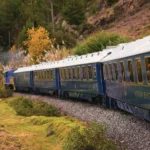
~14:00–15:30 h — Train Aguas Calientes → Ollantaytambo (1.5 hours through the Urubamba gorge cloud forest — the same gorge you walked through yesterday, seen from a different angle).
~17:30–18:00 h — Private transport from Ollantaytambo to Cusco.
What's included
Inclusions
-
Meals
- Meals: Day 1 lunch + dinner; Day 2 (no meals — Aguas Calientes on your own); Day 3 breakfast
-
Tickets & Permits
- Machu Picchu Circuit 2 entrance ticket
-
Guide
- MINCETUR-certified bilingual guide
-
Transportation
- Hotel pickup and return to Cusco
- Private transport Cusco → Abra Málaga (Day 1)
- Transport support vehicle following cycling group (Day 1)
- Transport Santa Teresa → Hydroelectric Station (Day 2)
- Train Aguas Calientes → Ollantaytambo (Day 3)
- Bus Aguas Calientes ↔ Machu Picchu (Day 3)
-
Accommodation
- 2 nights hotel (Santa Teresa + Aguas Calientes)
-
Other
- Mountain bikes, helmets, gloves, knee pads (Day 1)
- Zip-line at Santa Teresa (Day 1)
- First aid kit
Frequently Asked Questions
Do I need mountain biking experience for the Inca Jungle Trail?
No formal experience required, but you must be able to control a bike confidently on a descent. The cycling is on a sealed paved road (not off-road), but the grade is steep in sections and the speed can build quickly. If you have never ridden a bike as an adult, this is not the right tour. Basic competence — ability to brake, steer, and maintain balance on a downhill — is sufficient.
Is the zip-line included in the price?
Yes. The zip-line at Santa Teresa is included in the $550 price. Some competitor operators list the zip-line as an extra ($25–$35) — ours is part of the package.
What's the difference between the 3-day and 4-day Inca Jungle Trail?
The 4-day version adds an extra day between the cycling (Day 1) and the Hydroelectric walk (Day 3), allowing more time in the Santa Teresa area, a more leisurely hot springs visit, and optional white water rafting. The 3-day is the same core experience compressed — Day 1 cycling + zip-line + overnight, Day 2 Hydroelectric walk + Aguas Calientes, Day 3 Machu Picchu. For most travelers, 3 days captures everything.
Can I do white water rafting on the 3-day tour?
The 3-day itinerary doesn't include white water rafting (the 4-day version does). If this is a priority, book the 4-day tour.
Will I arrive at Machu Picchu exhausted after 2 days of activity?
Most travelers find Day 3 the easiest day — the bus ride to Machu Picchu at dawn, after 2 nights of hotel sleep (not camping), leaves most people energized. The fatigue pattern on the Inca Jungle Trail is inverted compared to the Classic Inca Trail: you front-load the physical effort (Day 1 cycling, Day 2 long walk), then rest at a hotel, then enjoy Machu Picchu relatively recovered.
Can’t find the answer to your question?
Get in touch with the experts at Travel Peru Tours for your inquiry.
Ask a questionTraveler reviews
Did you take this tour?
Share your experience with other travelers
Let our local experts help you plan your perfect adventure in Peru.
Write to us and we'll reply within 24 hours.
Related Tours
Related trips you might be interested in
From
$550 USD
Official endorsement
Associations & Certifications
We operate under the regulations and standards of Peru's leading tourism entities.