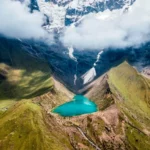
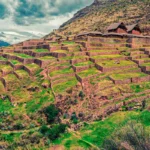
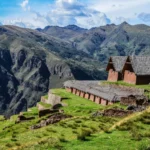
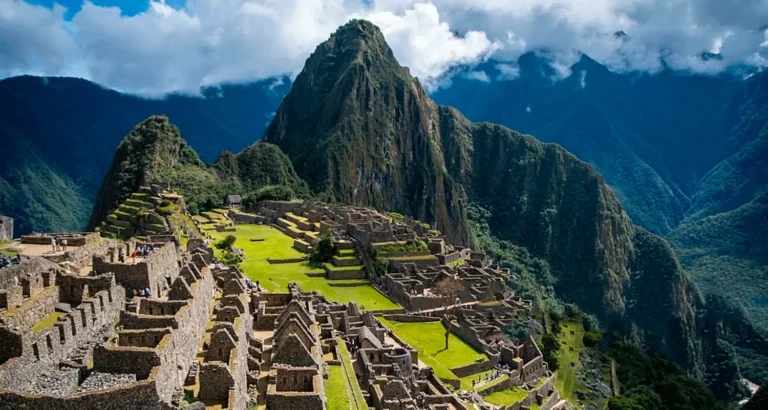
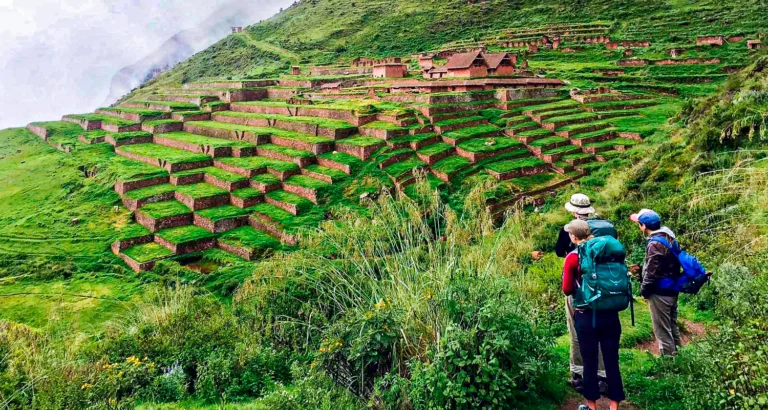
Huchuy Qosqo Sitio Arqueologico Inca Cusco
Huchuy Qosqo Ruinas Incas Valle Sagrado
1 / 2

Huchuy Qosqo Trek 2 Days: Cusco’s Hidden Inca Citadel (2026 Guide)

2 days / 1 night
  • Availability Daily departures
  • Transport Hotel pickup
  • Languages Spanish, English
  • Service type Not specified
  • Cancellation policy Not specified
  • Maximum altitude 4,393m (14,413 ft) m.s.n.m.

About this activity

Most people who visit Peru see Machu Picchu, Pisac, and Ollantaytambo. Very few ever reach Huchuy Qosqo (“Small Cusco” in Quechua) — a complete Inca royal estate perched on a natural terrace 700 meters above the Sacred Valley, with unobstructed views of the entire Urubamba basin. To get there on foot, you cross a 4,393m pass, walk the shores of a high-altitude Andean lake, and descend a mountain path that sees a fraction of the foot traffic of any other Cusco-region trek.

In two days and 15 km, the Huchuy Qosqo Trek covers more altitude change, more genuine Inca history, and more solitude than most half-day tours in the region. This is not a Machu Picchu shortcut — Huchuy Qosqo is a destination in its own right, and the people who’ve been there tend to call it one of their best days in Peru.

Price: $160 USD per person. Sleeping bag, camp cook, porter, and all meals included.


Why Choose This Tour?

  • Chinchero (3,762m) — Inca market town, trek start
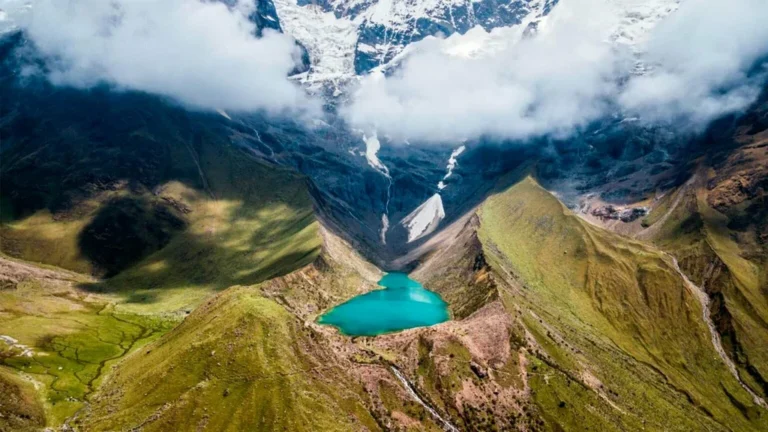
  • Laguna Piuray (3,900m) — high-altitude Andean lake
  • Paso Pucajasa (4,393m) — panoramic pass
  • Huchuy Qosqo ‘Small Cusco’ (3,650m) — Inca citadel
  • Sacred Valley viewpoint — 700m above the valley floor
  • Lamay (2,938m) — Sacred Valley end point

Itinerary

01
Day 01

Cusco → Chinchero → Laguna Piuray → Camp (3,800m)

06:00 h — Hotel pickup in Cusco. Private transport approximately 45 minutes northwest to Chinchero (3,762m).

Chinchero — one of the most traditional market towns in the Cusco region. On market days (Sunday, and sporadically Tuesday and Thursday), local women in traditional dress sell handwoven textiles — among the finest in Peru. The town sits on Inca foundations; the main church was built directly on top of an Inca palace wall, which is still visible. Your guide provides a brief orientation at the trailhead.

Breakfast in Chinchero before departure. Start hiking by approximately 07:30 h.

The first hour runs along the edges of original Inca agricultural terraces — stepped stone-and-earth platforms that have been farmed continuously since the 15th century. The Chinchero plateau is high and open; the air is thin; the views back toward the Cusco basin open immediately. This is the acclimatization section — keep the pace slow and breathe deliberately.

Laguna Piuray (~3,900m): Approximately 2 hours from Chinchero, the path descends slightly to the shoreline of this large natural lake — one of the few high-altitude lakes in the Sacred Valley region accessible on foot from Cusco. The water is dark, cold, and surrounded by totora reeds and paja brava grass. Andean birds are abundant here: Andean flamingos in some seasons, patos (diving ducks), gallaretas (coots), and various wading species. Rest stop and snack.

Ascent toward Pucajasa: The most demanding section of Day 1 — a 3-4 hour continuous climb through puna grassland and rocky outcrops toward the pass. The gradient is consistent but not extreme; the main challenge is the altitude. Above 4,000m, the pace naturally slows. Occasional llama herds graze the high pasture.

The views improve with every meter. By 4,200m, the Sacred Valley is visible to the east, and the snowcaps of the Cordillera Urubamba appear across the horizon.

~15:00-16:00 h — Camp (~3,800m). The campsite is positioned on an open slope with direct views to the Nevado Verónica (5,682m) and across the Sacred Valley. At this altitude, temperature drops sharply after sunset — from a comfortable afternoon warmth to near-freezing by 20:00 h. Your sleeping bag (included) is rated for these conditions.

Dinner prepared by the camp cook. Clear skies at this altitude typically produce excellent stargazing — no light pollution, minimal atmosphere. Early sleep advised — 06:00 h departure tomorrow.


02
Day 02

Camp → Paso Pucajasa (4,393m) → Huchuy Qosqo → Lamay → Cusco

06:00 h — Breakfast at camp. The morning is cold and often clear — the best weather window before clouds build in the afternoon.

Paso Pucajasa (4,393m / 14,413 ft): From camp, approximately 1 hour of climbing to the highest point of the entire trek. The path narrows as it approaches the pass through a rocky col between two ridgelines.

At the pass: a 360° panorama that encompasses:
- Nevado Verónica (5,682m) — directly north, the glacier visible from the pass
- Nevado Chinchaypuqyu — west, above Chinchero
- Sacred Valley — east and below, the Urubamba River visible as a silver thread 1,455m below
- Huchuy Qosqo — visible from the pass as a series of stone terraces on the cliffside below

The pass has a small apacheta (stone cairn) — a Quechua tradition of leaving a stone as an offering to the Apu (mountain spirit) and a symbol of having reached the summit. Your guide will explain the tradition. Allow 15-20 minutes here.

Descent to Huchuy Qosqo (3,650m): A steep but manageable 1.5-2 hour descent on an ancient stone-paved trail — partially original Inca road surface, partially eroded path. The vegetation changes rapidly as you lose altitude: tundra gives way to scattered queñoa trees (the highest-elevation native trees in Peru), then to terraced farmland.

Huchuy Qosqo (3,650m) — approximately 10:30-11:30 h:

Guided tour of the ruins (~1.5 hours):

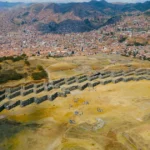
The main archaeological complex covers several hectares along a natural terrace that drops sharply on the Sacred Valley side. Principal features:

Structure Description
Kallancas Three large rectangular halls, up to 30m long — the largest non-temple Inca structures at this site
Colcas Circular and rectangular storage buildings arranged in rows — the Inca storage system that supplied the estate
Agricultural terraces Multiple tiers of stone-faced terracing, still farmable today
Principal plaza Open ceremonial space surrounded by kallancas and facing the Sacred Valley
Access ramp Original stone-paved Inca road descending toward Lamay — the supply route

The most striking feature of Huchuy Qosqo is what you can see from it rather than the ruins themselves: the entire Sacred Valley spread below, the Urubamba River running through its center, and the glaciated peaks across the valley. This is where Viracocha Inca came to look out over his empire.

Cusco Tourist Ticket required: Entry to Huchuy Qosqo requires the Boleto Turístico del Cusco (BTC, ~S/.70 PEN / approximately $18-20 USD). This is NOT included in the tour price — purchase at the INC office in Cusco before departure or from the warden at the site entrance. If you already have a tourist ticket (valid for multiple sites), it covers entry.

Lunch at the ruins (included). The cook prepares a full meal on site.

Descent to Lamay (2,938m): The final 1.5-2 hours follow the Inca access road down the mountain face — a zigzagging stone path through farmland communities. The temperature rises 10-15°C as you lose altitude. Lamay is a small town on the Sacred Valley floor.

~13:00-14:00 h — Transport Lamay → Cusco. Arrival in Cusco approximately 15:00 h. End of service.


What's included

Inclusions

  • Meals
    • All meals: 2 breakfasts + 2 lunches + 1 dinner (camp dinner Night 1)
  • Guide
    • MINCETUR-certified bilingual guide (Spanish/English) — full 2 days
  • Transportation
    • Private transport Cusco → Chinchero and Lamay → Cusco
  • Equipment
    • Sleeping bag (suitable for temperatures below freezing at 3,800m)
    • Complete camping equipment (double tent, sleeping mat, dining tent, chairs)
    • Professional camp cook
    • Porter for group gear
  • Other
    • Emergency oxygen + first aid kit

Frequently Asked Questions

Do I need prior trekking experience?

No. At 15 km over 2 days, this is within reach of anyone who walks regularly and has acclimatized in Cusco for 1-2 days. Day 1 is a consistent climb but not technical. The descent on Day 2 requires steady footing (boots and poles help). If you've done day hikes before, you'll be comfortable here.

Is the sleeping bag really included?

Yes — unlike most 2-day treks in Peru (which list sleeping bags as extra), ours is included in the $160 price. The sleeping bag is rated for temperatures appropriate to camping at 3,800m (below-freezing nights). You don't need to rent or bring one.

Do I need the Cusco Tourist Ticket?

Yes. Entry to Huchuy Qosqo requires the Boleto Turístico del Cusco (BTC). The partial circuit ticket (~S/.70 / ~$18 USD) covers Huchuy Qosqo and several other sites. If you're spending more than 3 days in Cusco and visiting any other included sites (Pisac, Ollantaytambo, etc.), the full circuit ticket (~S/.130) offers better value. Purchase at the INC office on Garcilaso Street in Cusco before your departure — the guide can advise the morning of the trek.

Can I combine this with the Machu Picchu trip?

Yes, but not on the same trip — Huchuy Qosqo descends into the Sacred Valley (Lamay), and the return to Cusco takes you away from Machu Picchu. The most popular combination: Huchuy Qosqo Trek (Days 1-2), 1 rest day in Cusco (Day 3), then Salkantay Trek or Inca Trail beginning (Day 4). Many travelers use the Huchuy Qosqo Trek as acclimatization before a more demanding multi-day route.

How many people will be at Huchuy Qosqo?

Very few — typically 10-30 visitors per day total, compared to 4,000-5,000 at Machu Picchu. On weekdays outside peak season (June-August), you may have the entire main plaza to yourself. This is a significant part of the appeal: you can explore the ruins without queuing or crowding, photograph without other tourists in the frame, and hear the site in relative silence.

What time do we get back to Cusco?

Approximately 15:00 h on Day 2, depending on group pace. This gives you the full afternoon and evening in Cusco — time to eat, recover, and plan your next day's activity.

Is there mobile signal on the route?

Minimal on Day 1 above Chinchero and at camp. At Huchuy Qosqo (Day 2): occasional Claro/Movistar signal. In Lamay: full signal. If you need consistent connectivity, alert family that you'll be offline from approximately 07:30 h Day 1 to 10:00 h Day 2.

Can I do this as a private tour?

Yes — private departures are available for groups of 2-6 people. Contact us for pricing. A private departure means your own guide, flexible pacing, and a more personal experience at the ruins.

Can’t find the answer to your question?

Get in touch with the experts at Travel Peru Tours for your inquiry.

Ask a question

Traveler reviews

From

$160 USD

Book now

Official endorsement

Associations & Certifications

We operate under the regulations and standards of Peru's leading tourism entities.

MINCETUR DIRCETUR GERCETUR ESSNA Marca Perú SUNAT Authorized Operator TripAdvisor GetYourGuide Viator WeTravel Y tú qué planes Peru Rail