Machu Picchu by Car 2 Days 2026: The Amazon Route via Santa Teresa
-
Availability Daily departures
-
Transport Hotel pickup
-
Languages English, Spanish
-
Service type Not specified
-
Cancellation policy Not specified
-
Maximum altitude 3800 msnm m.s.n.m.
About this activity
Machu Picchu by car 2 days 1 night via the Amazon Route: drive through the Sacred Valley to Santa Teresa, hike 3 hours through the cloud forest from Hidroeléctrica to Aguas Calientes, then visit Machu Picchu. Entrance, 1 night hotel, meals and bilingual guide included. No train needed.
Why Choose This Tour?
- Sacred Valley — views of Chicon, Salkantay and Veronica snow-capped mountains
- Santa Teresa — lunch stop with cloud forest scenery
- Hidroeléctrica — start of the 3-hour jungle trail to Aguas Calientes
- Mandor Gardens — orchids and waterfalls along the jungle trail
- Machu Picchu (2,430 m) — 7th Wonder of the Modern World
Itinerary
Day 01
Cusco → Sacred Valley → Santa Teresa → Hidroeléctrica → Aguas Calientes
07:00–07:30 hrs — Hotel pick-up in the historic center of Cusco. Tourist transport departs toward the Sacred Valley. The road initially follows the same route as the Sacred Valley tour — northeast from Cusco through Pisac and Urubamba — but then diverges at Alfamayo, heading deeper into the mountains toward the tropical zone.
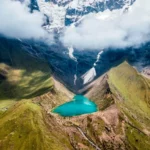
Sacred Valley crossing (3,000–3,800 m) — The first two hours of the journey pass through the heart of the Sacred Valley of the Incas: agricultural communities, Andean grasslands (puna), and views of three of the most prominent snow-capped mountains in the Cusco region — Chicon (5,530 m), Salkantay (6,271 m), and Veronica (5,750 m). These peaks are all that remain of the glaciers that once covered this entire landscape and fed the Urubamba River. In clear weather the summit snow is visible from the valley road. The route passes through a stark climate transition from cold dry highlands to the warm humid cloud forest of the Vilcabamba mountain range.
Alfamayo → Santa Teresa (1,500 m) — After crossing the high Andean section, the road begins a sustained descent through winding curves into the subtropical zone. The air warms noticeably, vegetation changes from dry grass to cloud forest, and the Apurímac River valley appears below. Santa Teresa is a small agricultural town surrounded by coffee, coca and banana plantations. It sits at the convergence of several river valleys and serves as the main access point for the Machu Picchu Amazon Route.
~13:30 hrs — Lunch at Santa Teresa (included) — A proper midday meal at a local restaurant before continuing the route. Typically includes soup, a main course (trout, chicken or rice dishes), beverage and dessert.
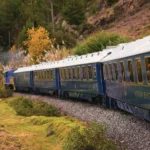
Santa Teresa → Hidroeléctrica (2,040 m) — After lunch, the tourist transport continues 45 minutes on a narrow track following the Urubamba River upstream to the Hidroeléctrica station — the hydroelectric power plant that generates much of the electricity for the Machu Picchu and Aguas Calientes area. This is the end of the road: no vehicle can continue from here, as the only routes forward are the 3-hour walking trail or the local train (a cargo and local-service train, not the tourist Expedition or Vistadome).
Hidroeléctrica → Aguas Calientes (2-3 hrs hiking, ~8 km) — The trail from Hidroeléctrica follows the left bank of the Urubamba River upstream through a flat section of cloud forest. This is one of the few sections of the Machu Picchu area that can be walked at low altitude with minimal physical exertion: the path is essentially flat (±30 m elevation change over 8 km), following the rail line most of the way. The terrain transitions from open scrub to increasingly dense subtropical forest as you approach Machu Picchu Pueblo.
Along the way: Mandor Gardens (Jardines de Mandor) — a side path leads 10–15 minutes to a small waterfall and orchid-rich garden with over 200 recorded orchid species and hummingbirds. Optional stop depending on group pace.
The trail crosses several small wooden bridges over tributary streams and passes small homesteads of local families who live along the rail corridor, growing coffee, bananas and tropical fruits. You may spot spectacled bears (ukuku), cock-of-the-rock (Peru's national bird) or Andean cock-of-the-rock in the vegetation.
~19:30–20:00 hrs — Arrival in Aguas Calientes (2,040 m). Hotel check-in. The guide provides the Day 2 briefing: bus schedule, Machu Picchu entry time, circuit plan, what to pack and wear, and meeting point.
Free evening — Dinner at own account. Aguas Calientes has a lively riverfront with restaurants serving local trout, Andean stews and grilled meats.
Day 02
Machu Picchu + Return to Cusco
05:00–05:30 hrs — Early wake-up. Two options to reach Machu Picchu:
Option A — Hike the stairs (free, 1h30min): A steep stone staircase of ~1,700 steps climbs 400 vertical meters from Aguas Calientes to the Machu Picchu gate. This is a demanding ascent at altitude but completely free and rewarding — you arrive at the gate before the buses, watch the sun rise over Huayna Picchu, and the effort adds to the experience. Recommended for fit travelers.
Option B — Consettur bus (~$20 round trip, not included): Buses depart from the plaza in Aguas Calientes starting at 05:30 hrs and run every 10–15 minutes. The 25-minute switchback road provides aerial views of the Urubamba canyon. The bus is a good option if you want to conserve energy for the Machu Picchu visit itself.
~06:00–07:00 hrs — Entry to Machu Picchu Archaeological Park (2,430 m / 7,970 ft)
2-hour guided visit with MINCETUR bilingual guide covering the main monuments:
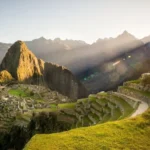
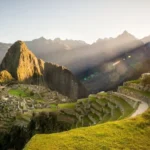
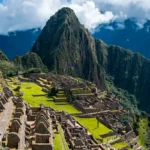
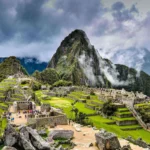
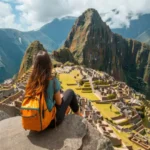
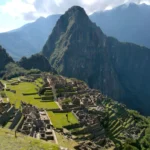
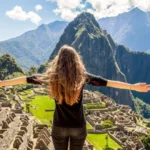
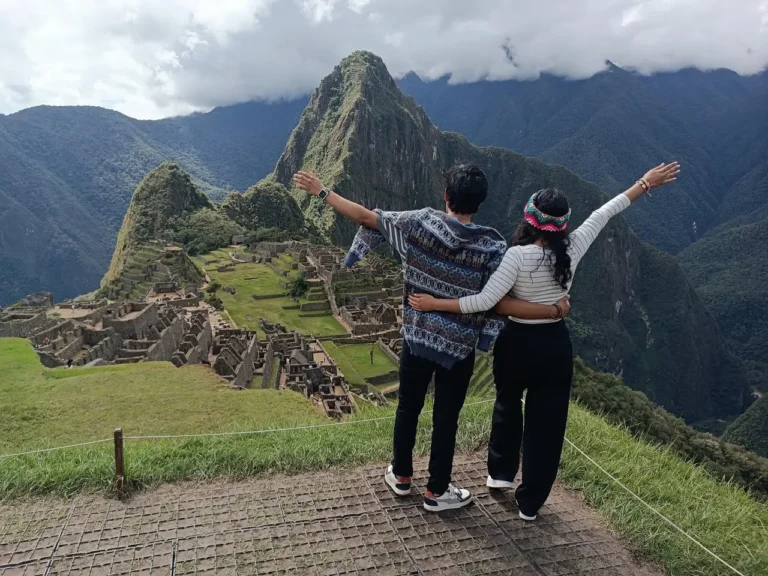
Classic access terrace — The first viewpoint offers the world's most photographed panorama: the terraced citadel against the backdrop of Huayna Picchu peak and the Urubamba Canyon 1,000 meters below. This photograph alone justifies the trip to Peru for many visitors.
Intihuatana ("hitching post of the sun") — The granite gnomon at the highest point of the main ceremonial complex. The Incas tracked solstice and equinox positions here, coordinating agricultural cycles across the Empire. Machu Picchu's Intihuatana is the only one in the Inca Empire never destroyed by the Spanish — all others were smashed during the colonial period as symbols of pagan worship.
Temple of the Three Windows — Three enormous trapezoid windows overlooking the plaza below, built without mortar. The stones fit together with millimetric precision — a razor blade cannot fit between them after 600 years of earthquakes and tropical humidity. Scholars debate whether the three windows represent the three worlds of Inca cosmology: Hanan Pacha (above), Kay Pacha (present), and Uku Pacha (below).
Sun Tower — A circular structure built over a natural granite outcrop, aligned so that sunlight enters through a specific window during the June solstice sunrise and hits an engraved stone marker. The most precise astronomical instrument in Inca architecture.
Temple of the Condor — The Andean condor (Vultur gryphus), largest flying bird in the Americas, carved into the natural rock formation. The stone "wings" spread six meters — a condor's full wingspan. Beneath it, an underground chamber used for ritual offerings.
Agricultural terraces — Over 700 terraces covering the hillside below the citadel, engineered with a multi-layer drainage system (gravel, sand, topsoil) that prevents erosion and creates microclimates for different crops. Several terraces have resident llamas — the same species Inca workers kept for wool, meat and carrying loads.
Key historical facts for your visit:
- Built under Pachacútec (~1438 AD) as a royal estate
- Abandoned ~1540, before Spanish arrived — likely due to smallpox that swept the Inca Empire before direct European contact
- Overgrown and forgotten for ~370 years
- Rediscovered by Hiram Bingham III on July 24, 1911, guided by a local farmer and an 11-year-old boy
- UNESCO World Heritage Site: 1983
- New Seven Wonders of the World: 2007
- Daily quota: ~4,500 visitors, 4 circuits
~09:00–11:30 hrs — Free time to explore additional areas, sit at viewpoints, or attempt extended circuits. Take photos from the classic upper terrace viewpoint (the one in every postcard) — best light is in the early morning hours before clouds build up in the valley.
~12:00 hrs — Consettur bus down to Aguas Calientes (or walk the stairs in ~45 min going down). Lunch at own account.
~14:30 hrs — Transfer from Aguas Calientes back to Hidroeléctrica: either walk the 8 km rail trail (2h30min) or take the local train (~$3–5 PEN, occasional service — ask guide for current schedule). Tourist transport departs Hidroeléctrica for Cusco.
~20:00–21:00 hrs — Arrival in Cusco, Plaza San Francisco area. End of service.

What's included
Inclusions
-
Meals
- 1 lunch (Day 1 in Santa Teresa)
- 1 breakfast (Day 2 in Aguas Calientes)
- 1 dinner (Day 1 in Aguas Calientes)
-
Tickets & Permits
- Machu Picchu Archaeological Park entrance ticket
-
Guide
- MINCETUR bilingual guide at Machu Picchu (2 hrs)
-
Transportation
- Tourist transport Cusco → Santa Teresa → Hidroeléctrica → Cusco (round trip)
-
Accommodation
- 1 night accommodation in Aguas Calientes (standard hotel)
-
Other
- First aid kit
Frequently Asked Questions
Is the hike from Hidroeléctrica difficult?
No — it is one of the easier approaches to Machu Picchu. The trail is flat, following the rail line at 2,040 m altitude. The distance is 8 km (about 5 miles) and takes 2.5–3 hours at a relaxed pace. Anyone in average physical condition can complete it. Trekking or sturdy walking shoes with grip are recommended (some rocky sections near bridges). The trail is significantly less demanding than, for example, the classic Inca Trail or even the Salkantay Trek.
Can I take the train back instead of walking?
Yes. A local (non-tourist) train service runs occasionally between Aguas Calientes and Hidroeléctrica. The fare is approximately S/. 10–15 PEN and schedules are not fixed — the guide will inform you of the current timetable. On the return (Day 2), you can also walk the trail again if you prefer. Most travelers who walked on Day 1 opt for the local train on the return.
What happens if it rains?
The Hidroeléctrica trail is walkable in rain — it is not a mountain path and does not become dangerously slippery in moderate rain. A rain poncho is included in the packing list. The dry season (April–October) offers the most reliable weather, but the route operates year-round. Machu Picchu itself receives visitors 365 days a year regardless of weather.
Is the Machu Picchu entrance included?
Yes. The entrance ticket to Machu Picchu Archaeological Park is included in the price. We purchase it using your passport number at time of booking — this is why advance booking is essential. Tickets are non-transferable and linked to the passport used for purchase. Machu Picchu has a strict daily visitor quota and sells out weeks ahead during high season (June–August, Easter, Christmas).
How far in advance should I book?
Minimum 48 hours for the logistics. For Machu Picchu tickets, book as far ahead as possible — 30+ days during high season (June–August) and Easter week. The daily quota is strictly enforced: if tickets for your date are sold out, there is no alternative. We check ticket availability before confirming your booking.
Is there a private version of this tour?
Yes — a private version with dedicated transport and guide is available for any group size from 1 person. Private tours run on your exact schedule and allow flexibility at each stop. Contact us on WhatsApp with your travel dates and group size for a private quote.
What should I bring for the hike?
- Trekking or sturdy walking shoes (not sandals or flip-flops)
- Rain poncho or waterproof jacket (afternoon showers common April–November)
- Insect repellent (Aguas Calientes area has mosquitoes)
- Water bottle (2+ liters — stay hydrated)
- Small daypack 20L maximum
- Sunscreen SPF 50+ (UV at altitude is intense even on cloudy days)
- Layers — warm in Cusco, hot in Santa Teresa, cool at Machu Picchu early morning
- Passport original (copies not accepted at Machu Picchu)
- Cash in soles for bus to Machu Picchu, additional meals and tips
What is the best time of year for this tour?
April–October (dry season) — Best visibility of Chicon, Salkantay and Veronica mountains during the drive. Clear mornings at Machu Picchu. Trail is dry and easy to walk. High season June–August requires booking 30+ days ahead. November–March (rainy season) — The cloud forest is lush and dramatic, Santa Teresa rivers run full, Machu Picchu is surrounded by green vegetation. Trail is walkable but may be muddy in sections. Fewer crowds. Lower prices.
Can children do this tour?
Children 6+ with average physical condition can complete the Hidroeléctrica hike. The trail is flat and non-technical. Children under 12 enter Machu Picchu at no charge (passport required). For children under 6 or families with very young children, the Machu Picchu Full Day by Train is a more practical option. Contact us for family-specific advice.
Why book with Travel Peru Tours?
We are 100% local Cusco-based operators. Our guides are MINCETUR-certified bilingual professionals with specific expertise on the Machu Picchu Amazon Route and the Hidroeléctrica trail. We operate this route year-round and know the current trail conditions, local train schedules and Cocalmayo hot springs access in real time. For availability and booking, contact us on WhatsApp.
Can’t find the answer to your question?
Get in touch with the experts at Travel Peru Tours for your inquiry.
Ask a questionTraveler reviews
Did you take this tour?
Share your experience with other travelers
Let our local experts help you plan your perfect adventure in Peru.
Write to us and we'll reply within 24 hours.
Related Tours
Related trips you might be interested in
From
$170 USD
Official endorsement
Associations & Certifications
We operate under the regulations and standards of Peru's leading tourism entities.